Enzymes Aren't Magic: Pet Urine Treatment Truth
Enzyme cleaners can help with pet urine, but they are not instant removers. Learn why dwell time, source detection, flushing, and honest expectations matter.
Pet urine is one of the most misunderstood carpet problems we see in Colorado Springs. Homeowners are often told to spray an enzyme product, let it sit for a few minutes, and expect the odor to disappear. Sometimes a light, fresh accident responds well. But when urine has traveled through the carpet, backing, padding, or even into the material below, the real answer is more involved.
Enzymes can be useful. They are not magic, and they are not a promise that every odor or stain can be erased in one visit. The difference matters because a pet-urine treatment should be built around the actual contamination—not a quick spray, a fragrance, or an unrealistic guarantee.
This guide explains how enzyme treatments work, why odor can return, what happens beneath the carpet surface, and what a professional evaluation should honestly cover.
The short answer: enzymes can help, but they do not replace removal
Enzyme and bacteria-based products are designed to act on specific organic material. In the right conditions, they can help break down odor-producing residues. That is useful chemistry. It is not the same as physically removing every bit of urine from a carpet system.
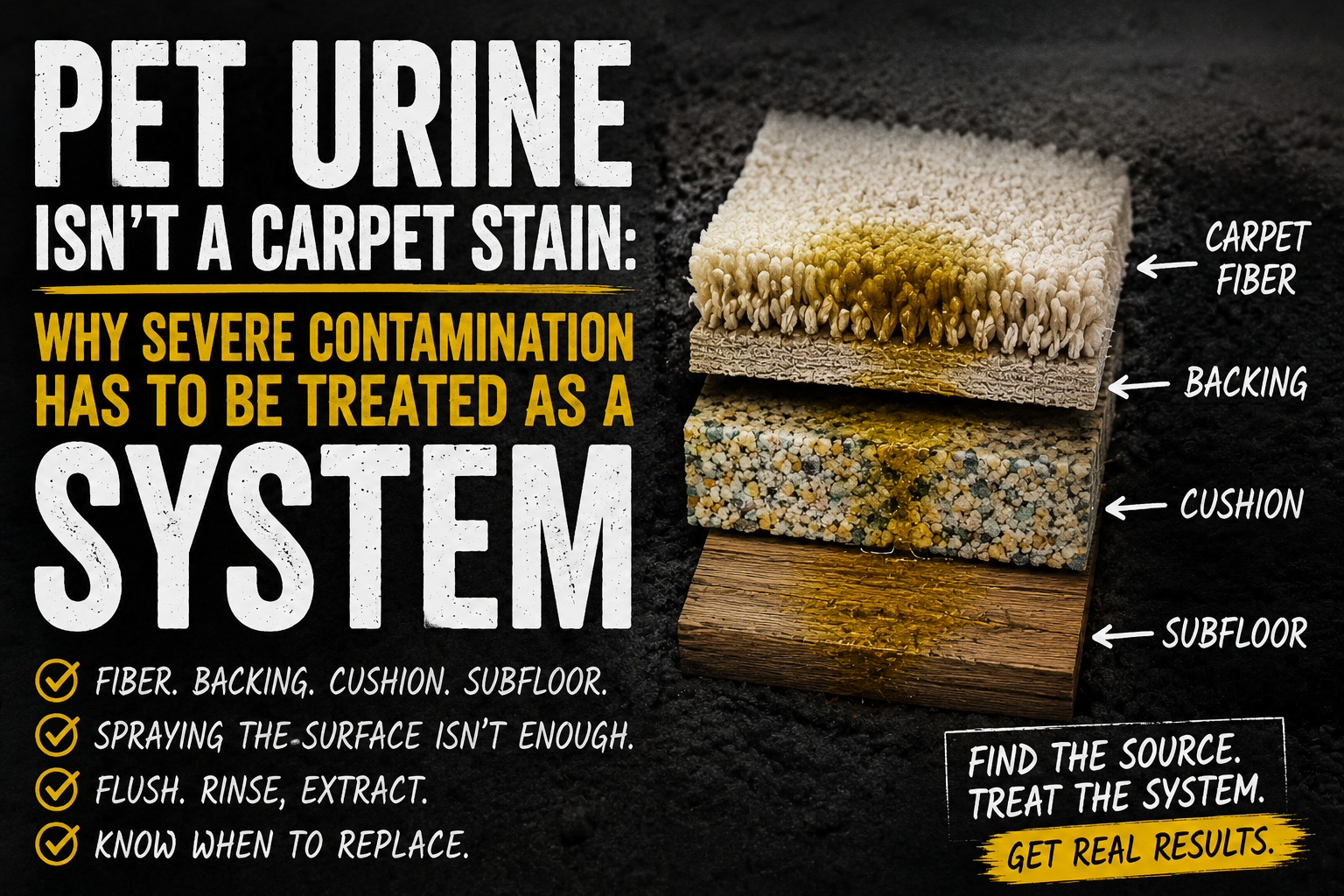
A carpet system has layers:
- The visible carpet face fiber
- Primary and secondary backing
- Carpet cushion or padding
- Tack strip edges and seams in some cases
- Concrete, wood, or another material underneath
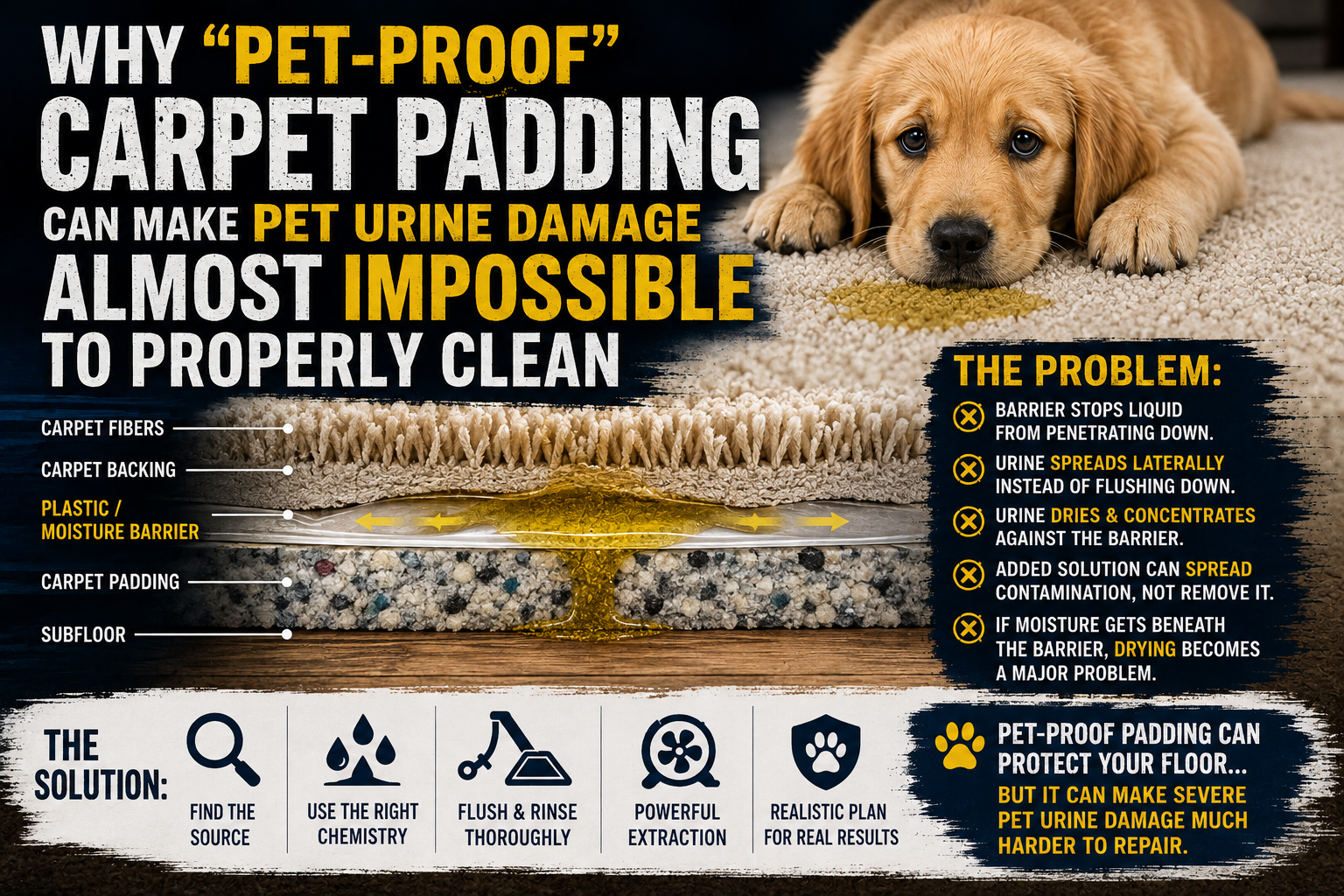
A visible spot on top of the carpet may be much smaller than the contamination below it. Urine follows gravity, wicks outward, and can spread through absorbent padding. That is why a room can smell clean immediately after a surface treatment and then develop odor again when humidity rises, the carpet gets damp, or the home warms up.
The goal is not simply to make the room smell better today. The goal is to identify where the contamination went, choose an appropriate treatment, and remove as much of the source as the materials and conditions allow.
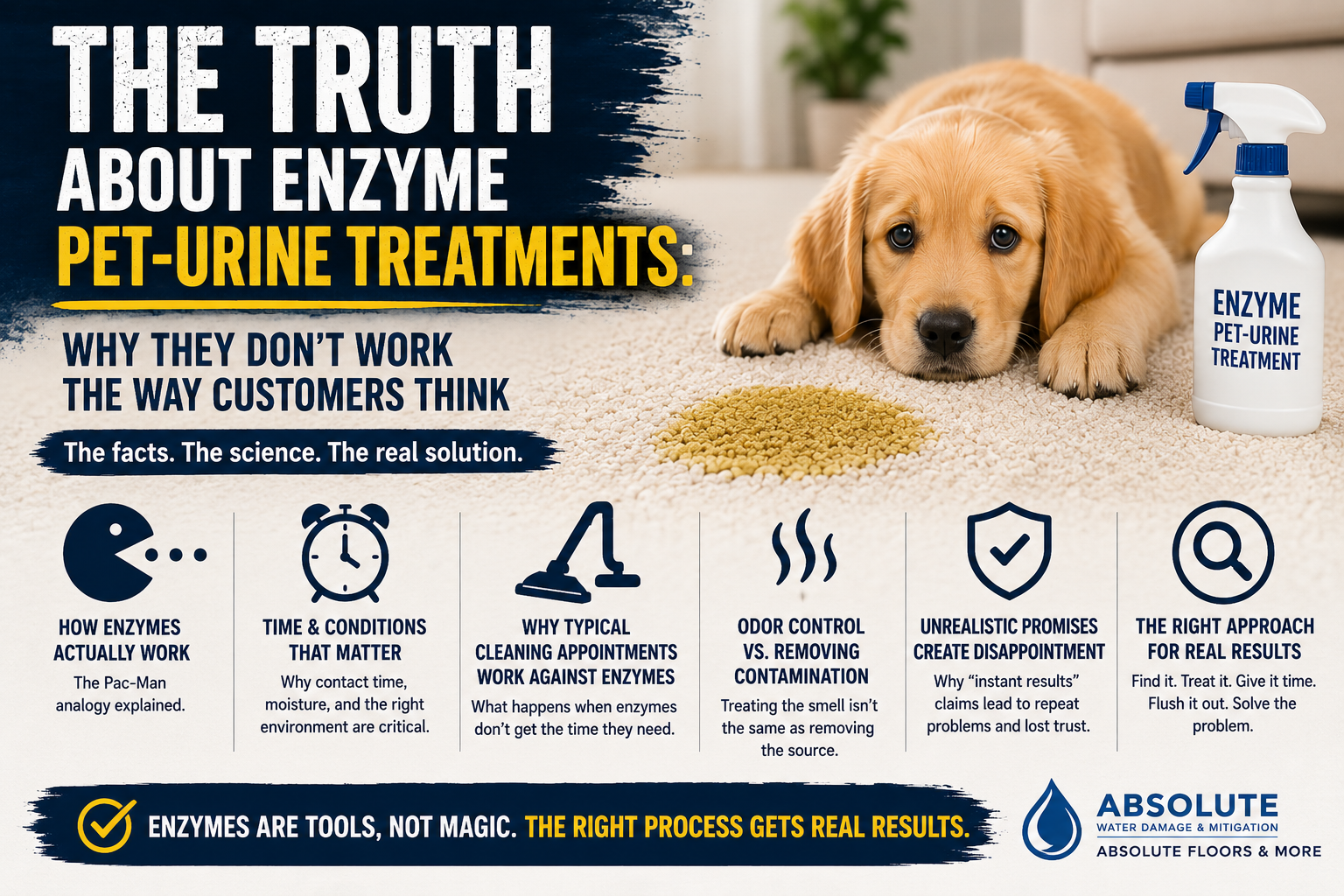
The Pac-Man explanation: why contact time matters
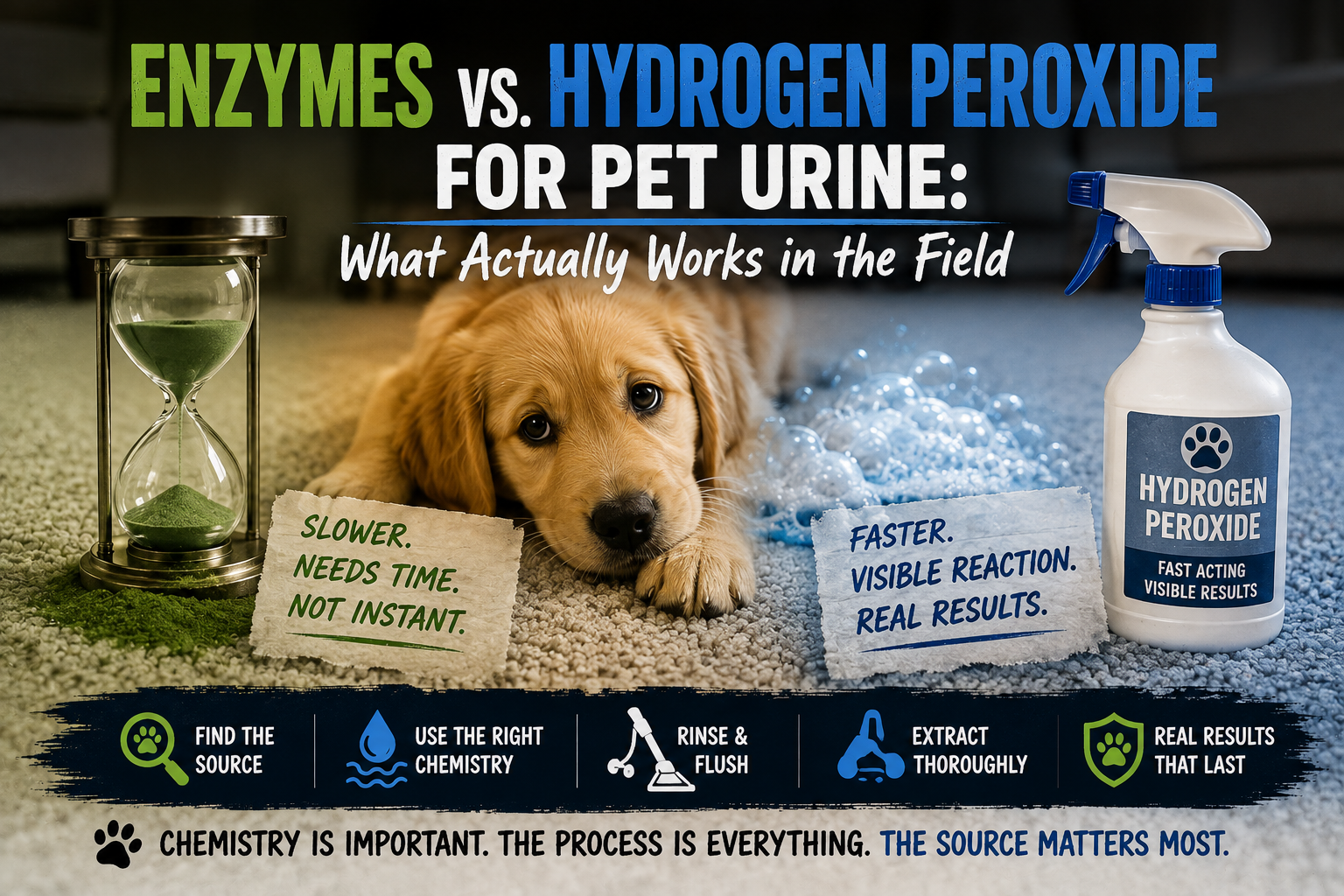
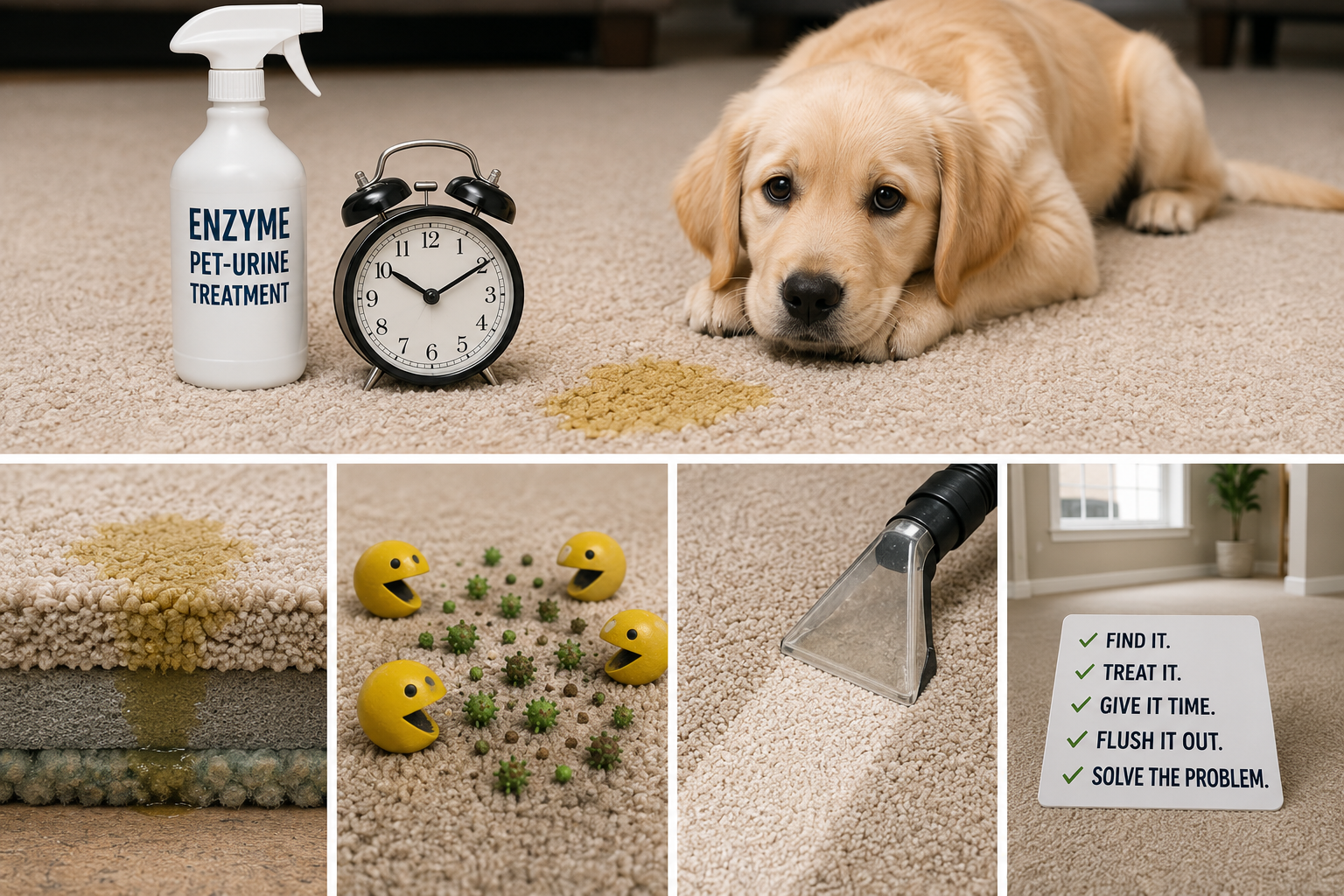
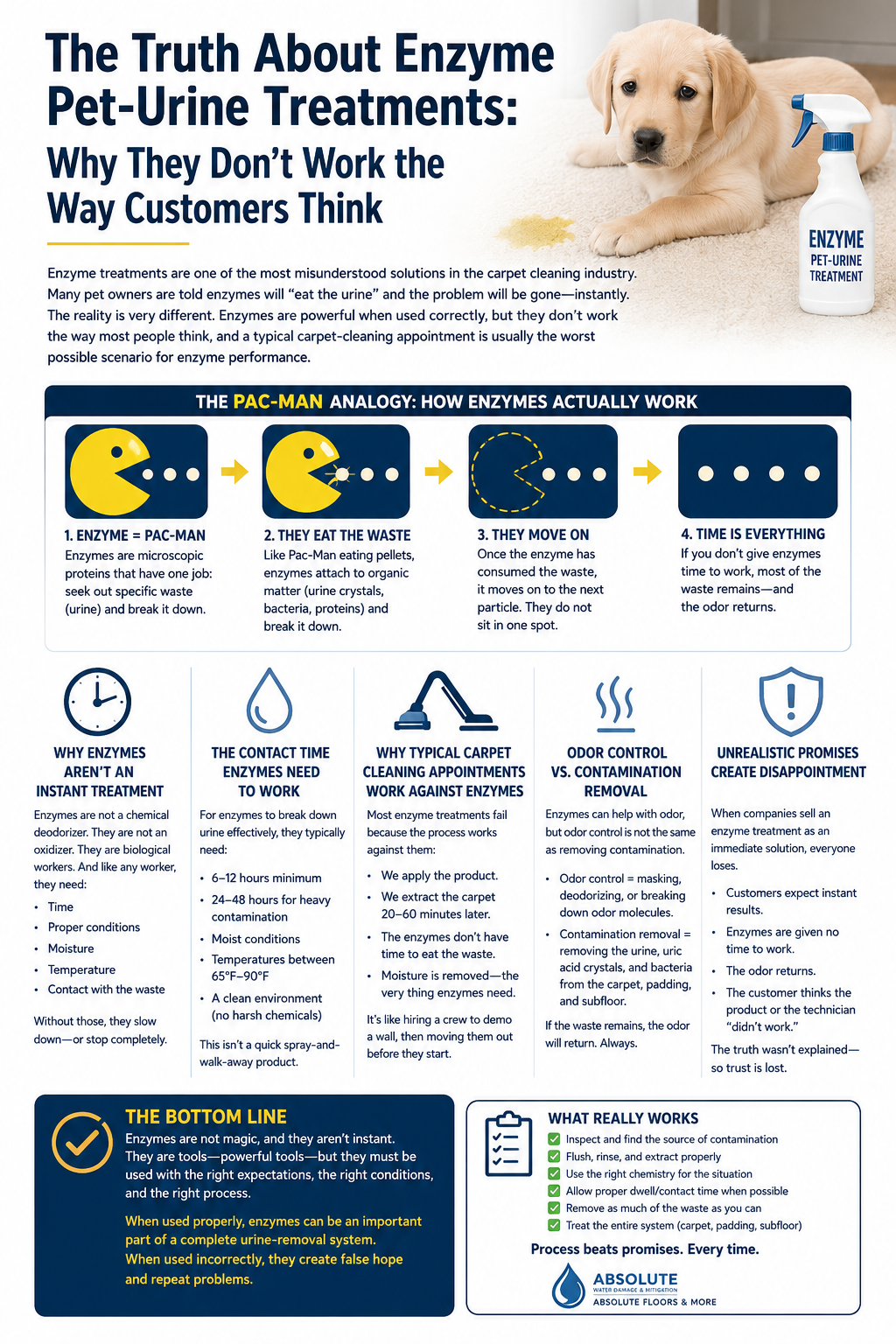
The simplest way to understand enzyme treatment is to picture thousands of microscopic Pac-Men released into a contaminated area. Their job is to work on certain organic material. But Pac-Man cannot clear the board the instant he arrives. He has to reach the material, remain in contact with it, and have enough time to work.
That is the gap between a product label and a real carpet-cleaning appointment.
Many enzyme or bacteria-based products require saturation of the affected area and meaningful dwell time. Some directions call for the product to remain in place while the area dries naturally, sometimes for many hours. If the product is sprayed on, given only a short dwell time, and then immediately extracted, the treatment may not have had the conditions it needs to do its intended job.
That does not mean extraction is wrong. Extraction is often essential because it helps remove dissolved soil, urine residue, and moisture. It means the process must be planned correctly. Chemistry, dwell time, agitation when appropriate, flushing, rinsing, extraction, and drying all have different roles.
Why pet urine odor can come back after cleaning
When a pet accident is fresh and shallow, prompt blotting and appropriate cleaning may solve the problem. Older or repeated accidents are different. As urine dries, the water evaporates and leaves concentrated residues behind. Odor can become more noticeable when moisture in the air reactivates those residues.
Common reasons odor returns include:
The treatment did not reach the full depth of contamination
Spraying the carpet surface does not guarantee that the product reached the backing and padding. If urine traveled deeper than the treatment, the remaining source can continue producing odor.
The visible stain was not the full size of the problem
The top of the carpet can hide a much larger affected area underneath. This is especially common with repeated accidents in the same location, large dogs, or urine that sat before treatment.
Odor was masked rather than the source being addressed
Fragrance can make a room smell better temporarily. It does not prove that contamination has been removed. A true treatment plan focuses on the source, not just the air above the carpet.
The material below the carpet may be involved
If contamination has reached padding, wood, concrete, baseboards, or other materials, cleaning the carpet face alone may not be enough. In some cases, replacement or repair of affected materials is the honest recommendation.
Deodorizing is not the same as decontaminating
This distinction is important. Deodorizing means reducing or changing an odor. Decontaminating means addressing the material causing the odor. Those goals can overlap, but they are not automatically the same thing.
A product may reduce odor-producing compounds. A cleaning process may flush and extract contamination. A sealant or repair may be needed when contamination has reached a surface that cannot be realistically cleaned. The right answer depends on the location, age, amount, and depth of the urine—not on a one-size-fits-all add-on.
At Absolute Floors & More, we do not present a pet treatment as a magic button. We explain what we find, what the process can reasonably address, and where the limitations are before work begins.
What a professional pet-urine evaluation should include
A good evaluation starts with questions and inspection, not promises. We want to understand the history of the area: how long the odor has been present, whether accidents are repeated, whether the carpet has been treated before, and whether the odor changes with humidity or temperature.
A professional assessment may include:
- Locating suspected contamination areas with appropriate inspection methods
- Checking whether the affected area extends beyond the visible stain
- Evaluating carpet construction, backing, seams, and padding conditions
- Determining whether flushing and extraction are practical
- Discussing whether the subfloor or other materials may be involved
- Explaining realistic outcomes before treatment begins
No honest professional can guarantee a perfect result without knowing where the contamination is and how far it traveled. The right expectation is a clear explanation of the condition, the proposed process, and the possible next steps if the source is deeper than cleaning can reach.
The role of chemistry, dwell time, flushing, and extraction
Professional pet odor treatment is a process, not a single product. Different steps serve different purposes.
Chemistry
The chemistry should match the type of contamination and the carpet. Enzyme or bacteria-based products may be part of the plan, but they must be used according to their intended conditions. Other chemistry may be appropriate depending on the situation.
Dwell time
Dwell time gives the selected chemistry an opportunity to interact with the material it is meant to affect. More time is not automatically better, and every product has its own directions. The key is not treating dwell time as an afterthought.
Flushing and rinsing
When conditions allow, flushing helps move contamination out of the carpet system rather than simply redistributing it. Rinsing helps remove residues left from soil, urine, and cleaning chemistry.
Extraction
Powerful extraction is a major part of removing moisture and suspended contamination. It also supports faster drying, which is important for the carpet and the home.
Drying and follow-up expectations
Some treatments continue to change as the area dries. Odor should be evaluated after the carpet has dried, not only while the room is filled with cleaning fragrance or dampness. If the source is deeper than the treatment can reach, we will explain that honestly.
When cleaning alone may not be enough
There are situations where cleaning can improve the condition but cannot reasonably restore every affected material. Examples include repeated urine saturation, contamination that has reached padding or subfloor, permanently altered carpet dye, damaged backing, or structural materials that continue to hold odor.
In those cases, the honest path may involve targeted replacement, repair, or another specialist recommendation. That is not a failure of cleaning. It is an accurate response to the condition of the materials.
We would rather explain a limitation before you spend money than sell a treatment with a promise that the carpet system cannot support.
What homeowners can do before a professional visit
If an accident is fresh, blot it promptly with clean white towels. Press down firmly; do not scrub, because scrubbing can spread the contamination and damage fibers. Avoid mixing multiple household chemicals. Combining products can leave residues, create unwanted reactions, or make professional treatment harder.
If you are using a consumer product, follow its directions exactly and understand that surface application may not reach deeper contamination. Keep pets away from the area while it is being treated and drying. If odor persists, returns with humidity, or involves repeated accidents, schedule an evaluation instead of continuing to layer products on the same spot.
Frequently asked questions about enzyme pet urine treatment
Do enzyme cleaners remove pet urine from carpet?
They can help break down certain organic residues when they reach the contamination and are given appropriate conditions and dwell time. They do not automatically remove urine from carpet backing, padding, or subfloor. Physical removal through proper flushing and extraction may also be necessary.
Why does dog urine smell come back after carpet cleaning?
The remaining source may be below the carpet surface, the treatment may not have reached the full affected area, or humidity may be reactivating dried residues. A professional inspection helps determine which condition is present.
Can you guarantee pet odor removal?
An honest answer depends on the depth and extent of contamination. We can explain the condition, recommend the appropriate process, and set realistic expectations. If urine has reached materials that cannot be fully cleaned, we will tell you before work begins.
Is a stronger fragrance the same as odor removal?
No. Fragrance can temporarily cover odor, but it does not prove that the contamination source has been removed.
How do I know if urine reached the padding or subfloor?
Repeated accidents, large affected areas, odor that returns after cleaning, and strong odor during humid conditions can all be signs. A professional evaluation is the best way to determine the likely depth and scope.
Get an honest pet-urine evaluation in Colorado Springs
If you are dealing with dog urine odor, cat urine odor, recurring pet stains, or a carpet that still smells after store-bought enzyme products, you deserve a clear answer—not a sales pitch. Absolute Floors & More provides professional carpet cleaning and pet-urine treatment in Colorado Springs with a process built around source identification, appropriate chemistry, realistic dwell time, flushing, extraction, and honest expectations.
We will explain what we see, what can realistically be cleaned, and when deeper contamination may require another solution. Call (719) 896-6274 to request an evaluation and a straightforward recommendation for your home.
Explore Topics
Written by
Nate Lemieux
Content creator and writer sharing insights and stories.