
Inside a Real Water & Mold Damage Job in Colorado Springs — 10 Photos from Start to Finish
What does a real water damage and mold remediation job actually look like? We documented this Colorado Springs job from initial assessment through full remediation — 10 real photos, no stock images, no filters. This is what Absolute Floors & More does every day.
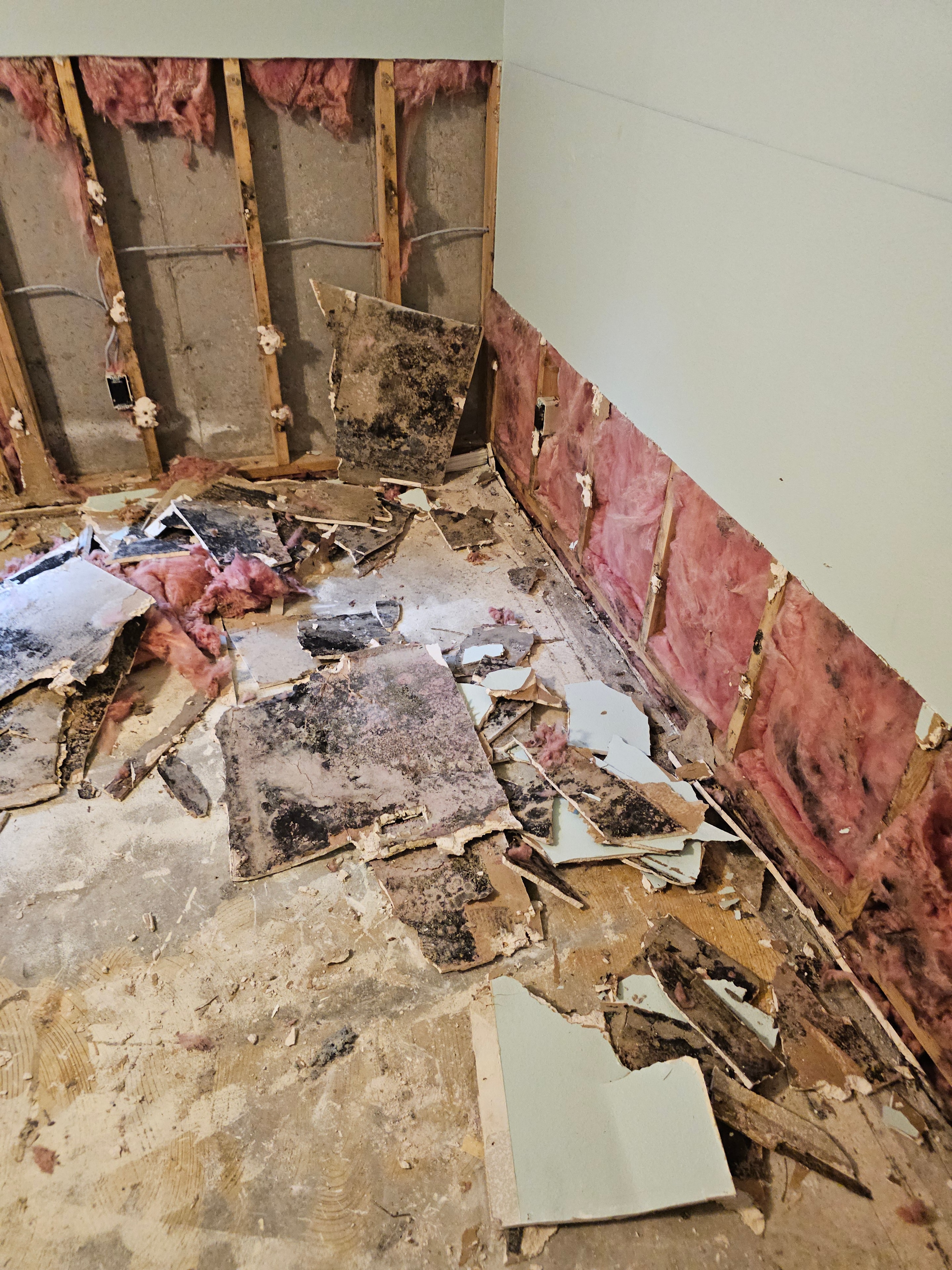
Most companies show you stock photos of clean equipment and smiling technicians. We show you the actual work.
This is a real water damage and mold remediation job we completed for a Colorado Springs homeowner. Every photo in this post was taken on-site by our team. No staging, no stock images, no filters. This is what water and mold damage actually looks like — and this is what professional remediation actually involves.
If you are dealing with water damage or suspect mold in your home, this post will show you exactly what to expect when you call Absolute Floors & More at (719) 896-6274.
The Call
The homeowner called us after noticing a persistent musty smell in their lower level. They had experienced a slow leak — the kind that hides behind walls and under flooring for weeks before anyone notices. By the time we arrived, the damage was already significant.
This is the most common scenario we see: a small, undetected water source that creates a large, hidden mold problem. The smell was the first warning sign. The photos tell the rest of the story.
Photo 1: Initial Assessment — What We Found on Arrival
The first thing we do on every job is a thorough visual assessment combined with moisture meter readings. Before we touch anything, we need to understand the full scope of the damage — where the water came from, how far it spread, and what materials are affected.
On this job, moisture readings confirmed what the smell had already suggested: water had penetrated well beyond the visible damage zone. This is why professional assessment matters. Homeowners often see the surface damage and assume that is all there is. Moisture meters tell a different story.
What we look for during initial assessment:
- Visible water staining and discoloration
- Soft or spongy flooring and wall materials
- Elevated moisture readings (anything above 16% in wood is a concern; above 20% is active damage)
- Visible mold growth — though mold is often hidden behind walls and under flooring
- The source of the water intrusion — because if you do not fix the source, remediation is temporary
Photo 2: Water Damage Extent — Flooring and Subfloor
This photo shows the extent of water damage to the flooring and subfloor. What looks like surface staining is actually the visible evidence of deep moisture penetration. The flooring material had absorbed water and was beginning to delaminate. The subfloor beneath showed elevated moisture readings that indicated the water had been present for an extended period.
Flooring that has been wet for more than 24–48 hours almost always needs to be removed. There are two reasons for this:
- The flooring itself is damaged — swelling, delamination, and warping make it structurally unsound and visually unacceptable.
- The subfloor and framing beneath need to dry — leaving wet flooring in place traps moisture against the subfloor and framing, dramatically extending drying time and creating ideal conditions for mold growth.
On this job, the flooring came up. It was the right call.
Photo 3: Mold Discovery — Behind the Wall
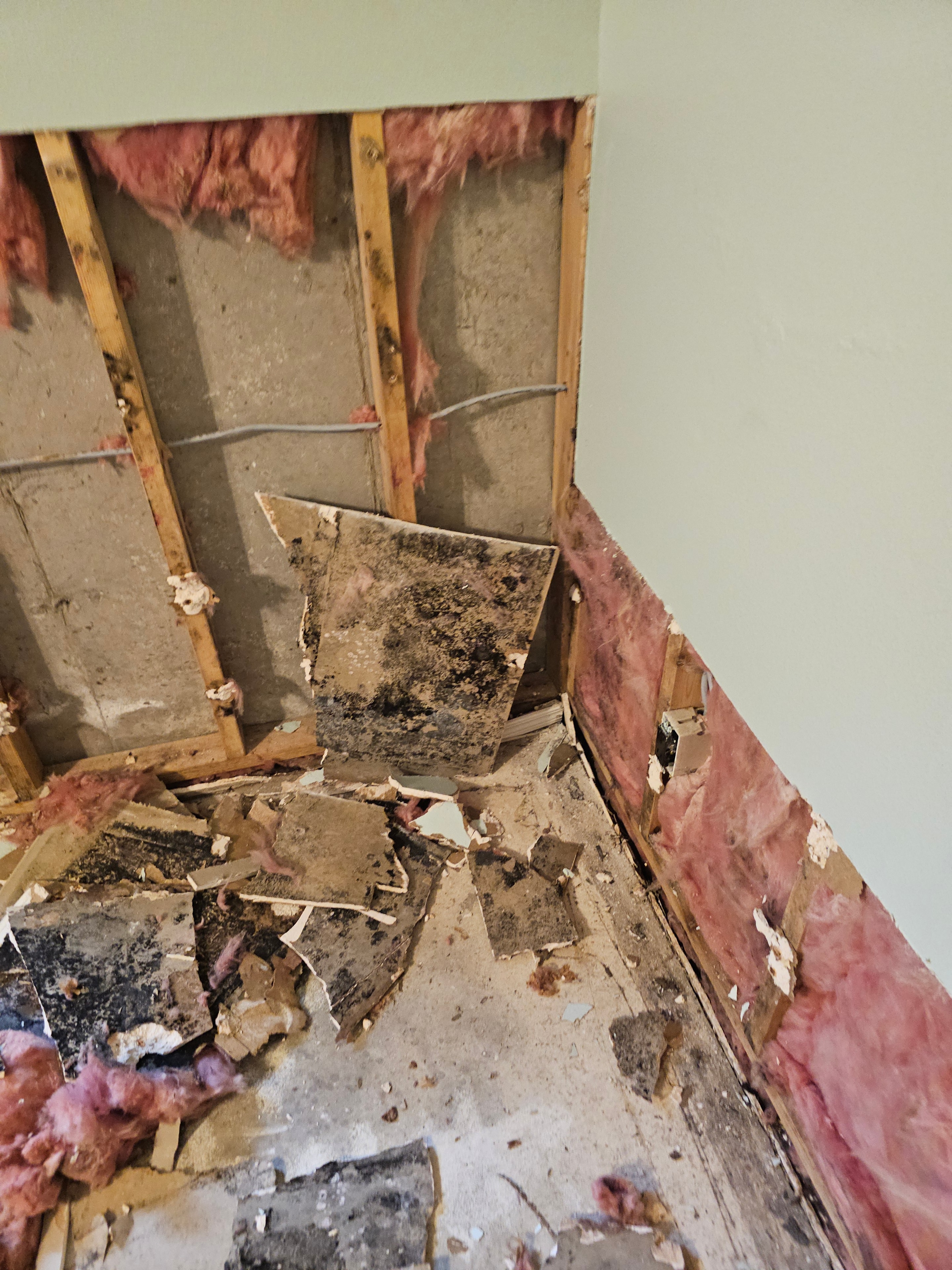
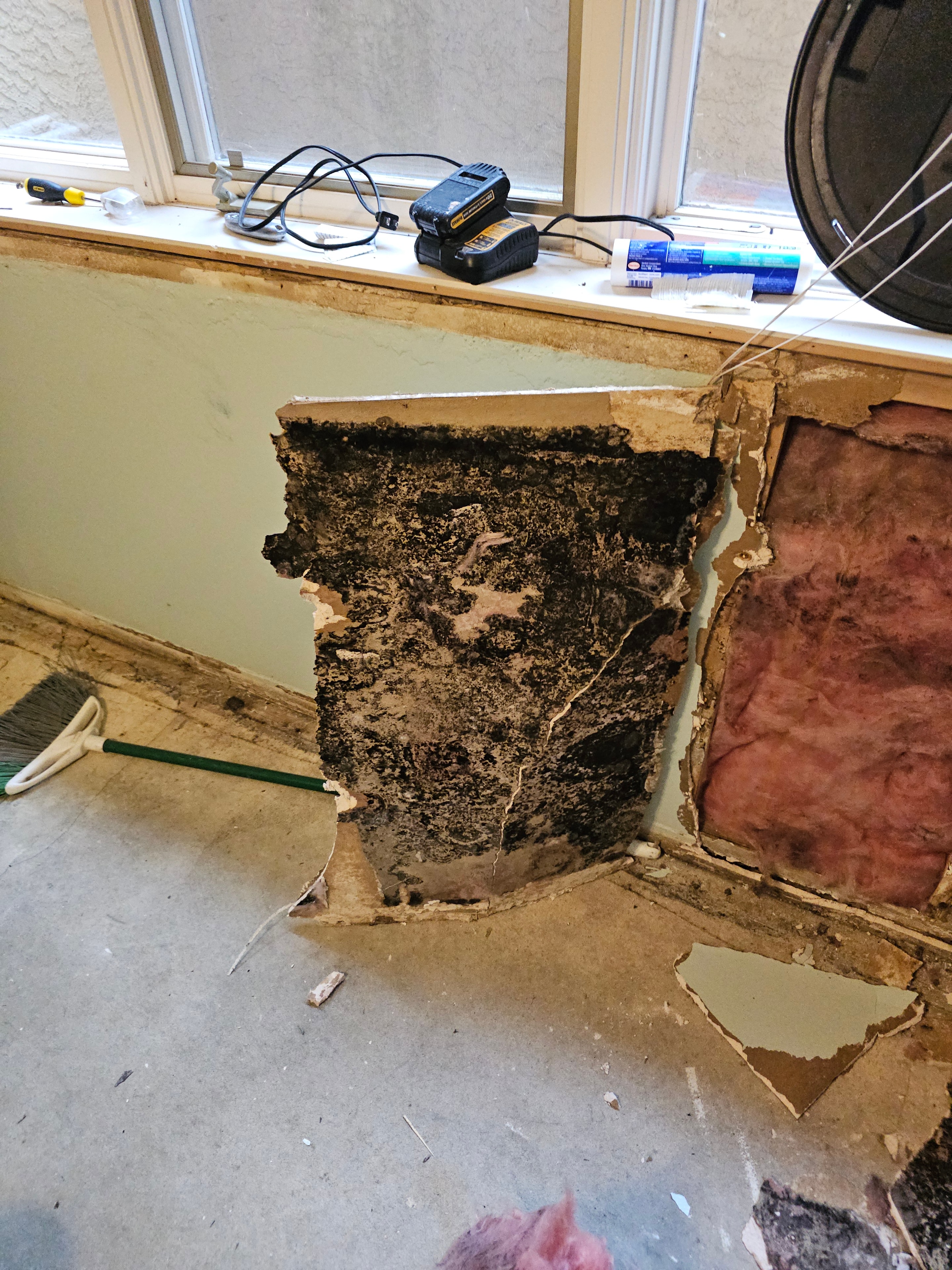
This is the photo that changes the conversation.
When we opened the wall, we found active mold growth on the framing and drywall backing. This is extremely common in water damage situations — mold begins growing within 24–72 hours of water exposure, and it almost always starts in the hidden spaces: behind drywall, under flooring, inside wall cavities.
The homeowner had no idea this was here. The wall looked fine from the outside. The smell was the only clue.
This is why you cannot remediate water damage without opening walls. Moisture meters can tell you that moisture is present inside a wall cavity. They cannot tell you whether mold has already started growing. The only way to know is to look.
The mold visible in this photo is consistent with Cladosporium or Penicillium/Aspergillus species — the most common mold types found in water-damaged Colorado Springs homes. Definitive identification requires laboratory testing, which we can arrange when clients need documentation for insurance or health concerns.
Photo 4: Mold Extent — Structural Framing
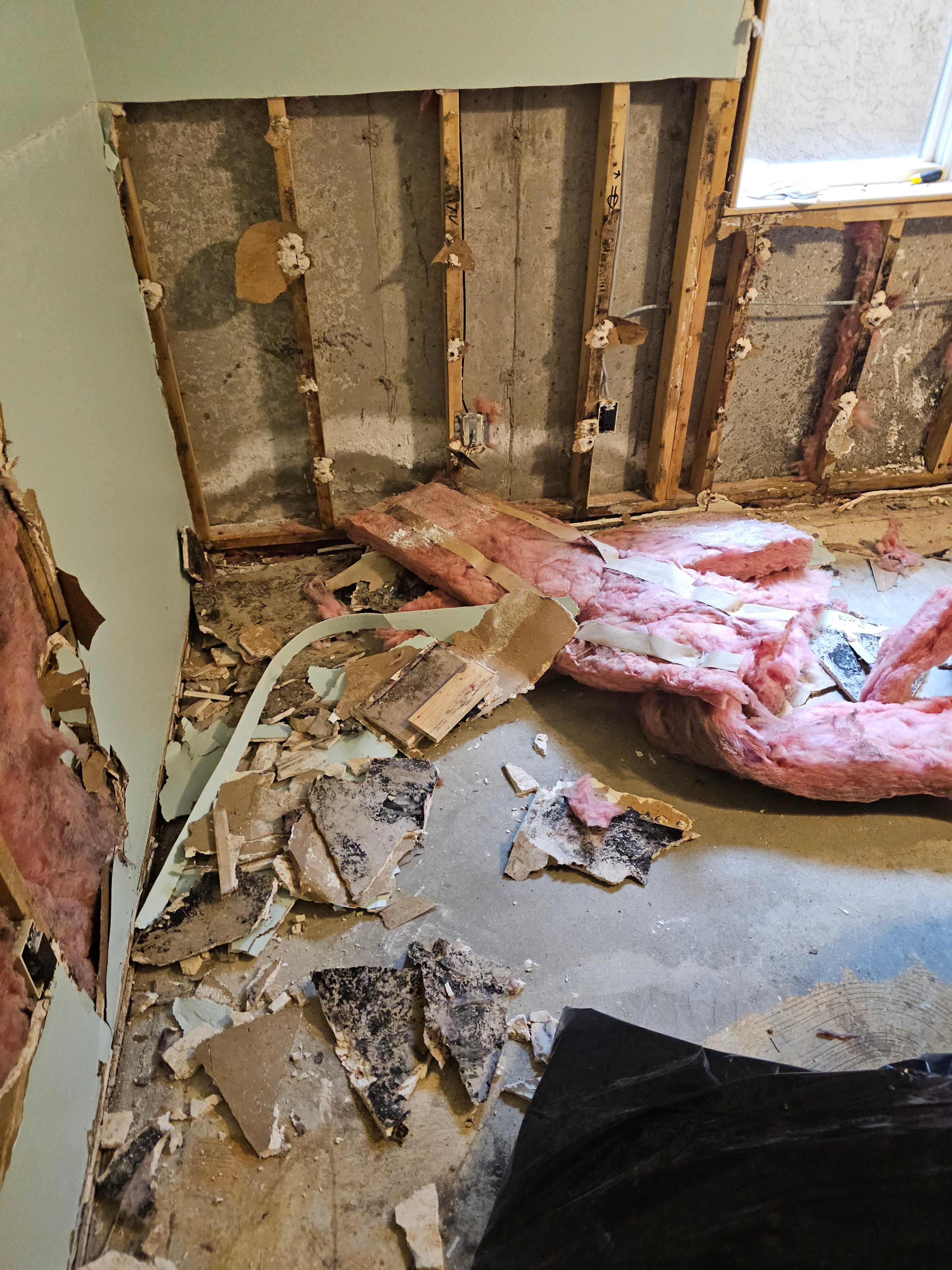
Once we opened the wall, we could see that the mold had spread to the structural framing. This is a critical finding — mold on framing lumber is more serious than mold on drywall for two reasons:
- Drywall is cheap to replace. Framing lumber is structural. Mold that penetrates deeply into framing can compromise the structural integrity of the wall.
- Framing is harder to treat. Drywall with mold gets removed and replaced. Framing with surface mold can often be treated with antimicrobial solutions and HEPA-sanded, but deeply penetrated framing may need to be sistered or replaced.
On this job, the framing showed surface mold that was treatable. We documented the extent, treated the affected surfaces with EPA-registered antimicrobial solution, and confirmed clearance before closing the wall.
Photo 5: Containment Setup
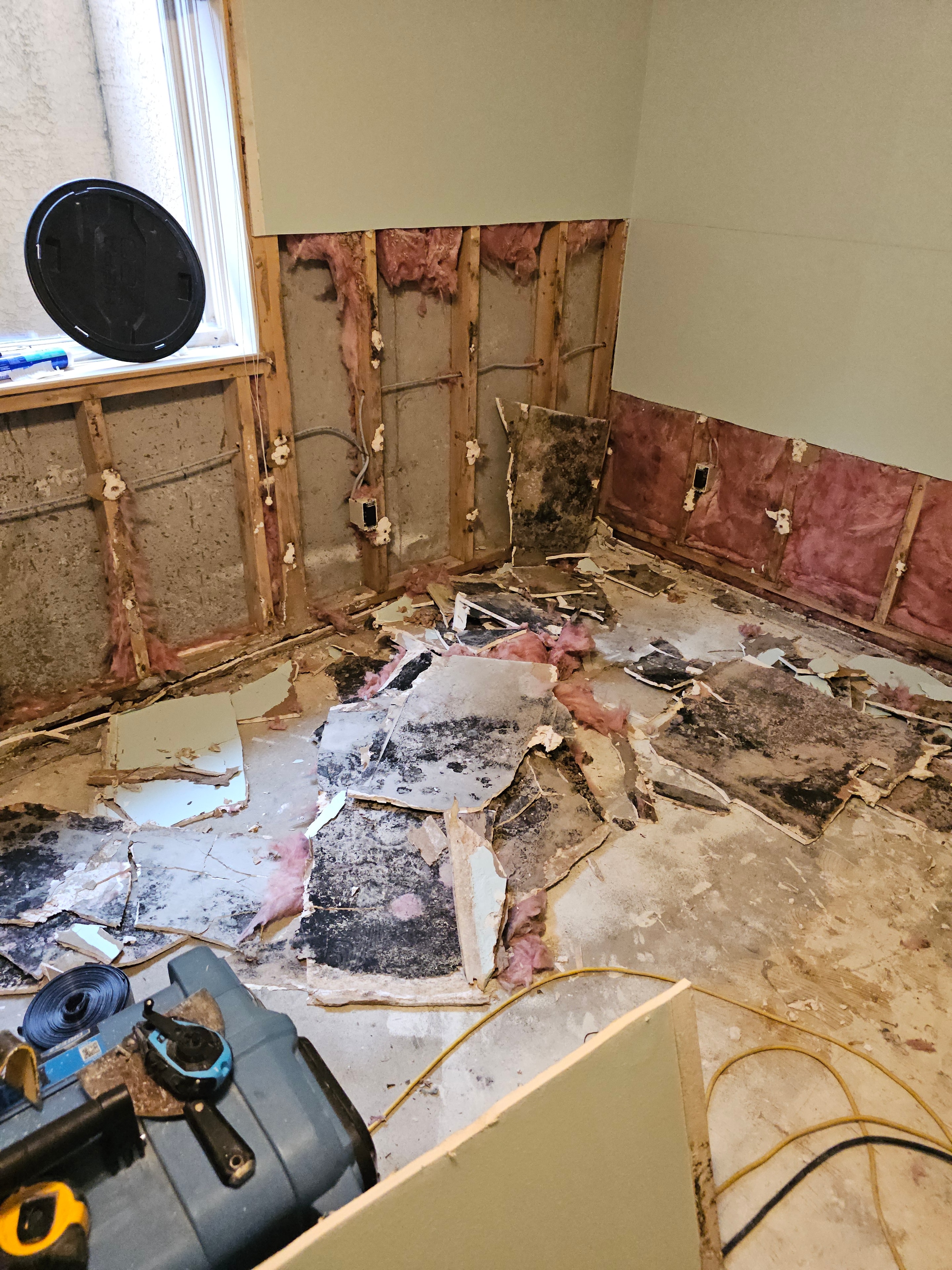
Before any mold removal begins, proper containment is essential. This photo shows the containment setup we use to prevent mold spores from spreading to unaffected areas of the home during remediation.
Our containment protocol includes:
- Polyethylene sheeting barriers sealing off the work area from the rest of the home
- Negative air pressure using HEPA-filtered air scrubbers — air flows into the work area, not out of it, preventing spore migration
- Sealed HVAC vents to prevent spores from entering the duct system
- Proper PPE for all technicians: N95 or P100 respirators, Tyvek suits, gloves, and eye protection
Containment is not optional. Improper mold removal without containment can spread spores throughout a home, turning a localized problem into a whole-house contamination event. We have seen this happen with DIY attempts and with unqualified contractors who do not follow proper protocols.
Photo 6: Mold Removal in Progress
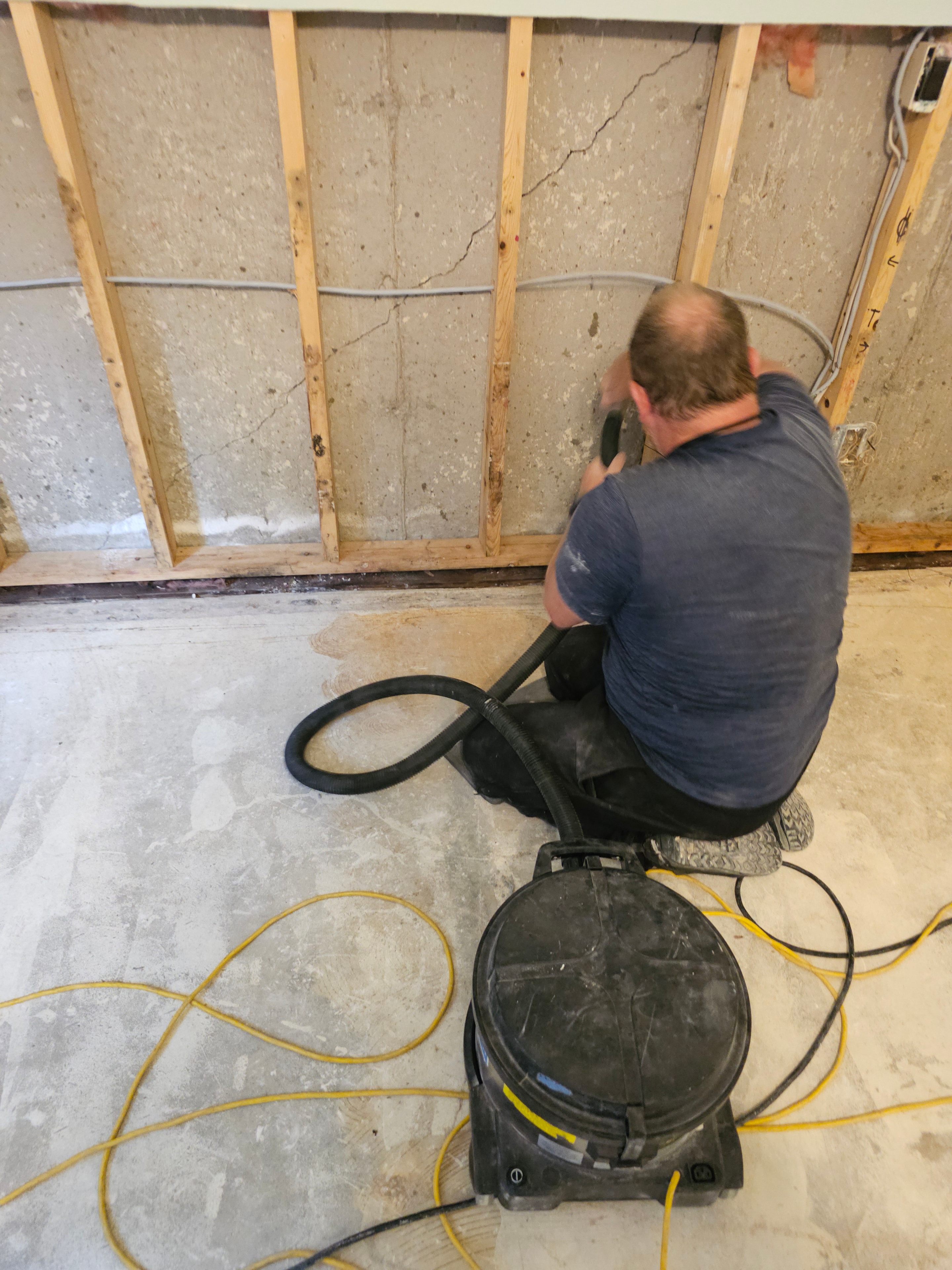
This photo shows mold removal in progress. Affected drywall has been removed and bagged for disposal. All mold-contaminated materials are double-bagged in 6-mil polyethylene bags, sealed, and disposed of as regulated waste.
The removal process on this job included:
- Complete removal of all mold-affected drywall (we cut 12 inches beyond the visible mold boundary — mold spreads through materials before it becomes visible)
- HEPA vacuuming of all exposed framing and surfaces
- Application of EPA-registered antimicrobial solution to all exposed structural materials
- HEPA air scrubbing running continuously throughout the process
The HEPA air scrubbers are not optional equipment — they are running the entire time we are working, capturing airborne spores before they can settle on clean surfaces or migrate out of the containment area.
Photo 7: Structural Drying Equipment
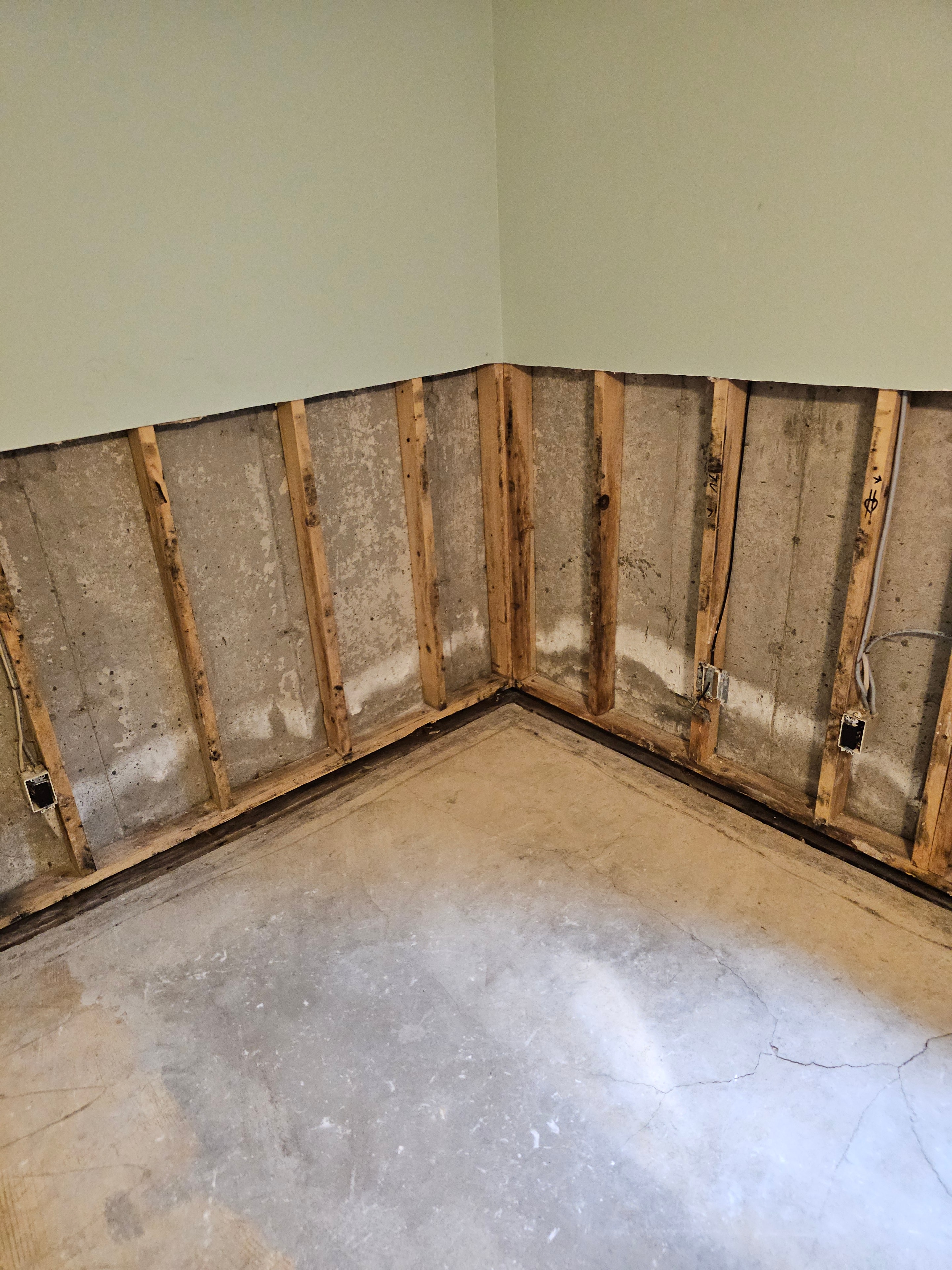
With the mold-affected materials removed, the structural drying phase begins. This photo shows the industrial drying equipment we deploy: commercial-grade dehumidifiers and high-velocity air movers positioned to maximize airflow across all affected surfaces.
The difference between professional and consumer drying equipment:
Consumer dehumidifiers remove 30–50 pints of water per day. The commercial units we use remove 150–200+ pints per day. Consumer box fans move air at roughly 200 CFM. Our high-velocity air movers operate at 1,500–2,000 CFM.
This is not a minor difference. It is the difference between drying a structure in 3–5 days versus 2–3 weeks. Every additional day of elevated moisture is another day of mold risk.
We take daily moisture readings throughout the drying process and document them in a drying log. The drying phase is not complete until moisture readings return to normal levels — not when the equipment has been running for a certain number of days.
Photo 8: Moisture Monitoring and Documentation
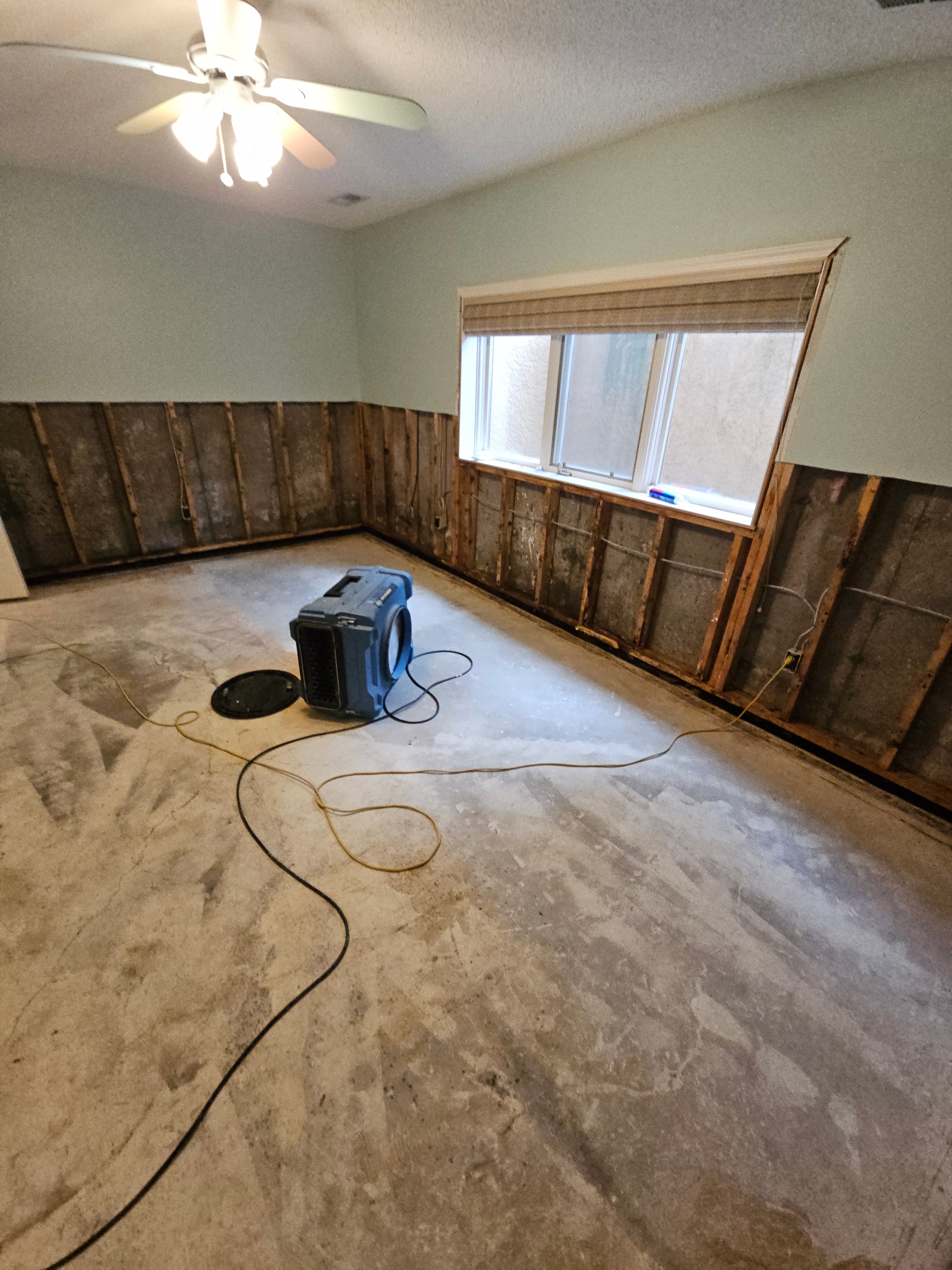
This photo shows the moisture monitoring and documentation process. Every day during the drying phase, we take moisture readings at multiple points throughout the affected area and record them in a drying log.
Why documentation matters:
- Insurance claims — Insurance companies require documentation of the drying process. A drying log with daily moisture readings is essential for a successful claim.
- Verification — Documentation proves that the structure was actually dried to acceptable moisture levels before reconstruction began. Without this, there is no way to verify that the job was done correctly.
- Liability protection — For the homeowner, documented drying verification protects against future disputes about whether the remediation was complete.
We provide every client with a complete drying log as part of our documentation package. If your contractor cannot provide this, that is a serious red flag.
Photo 9: Post-Remediation Inspection
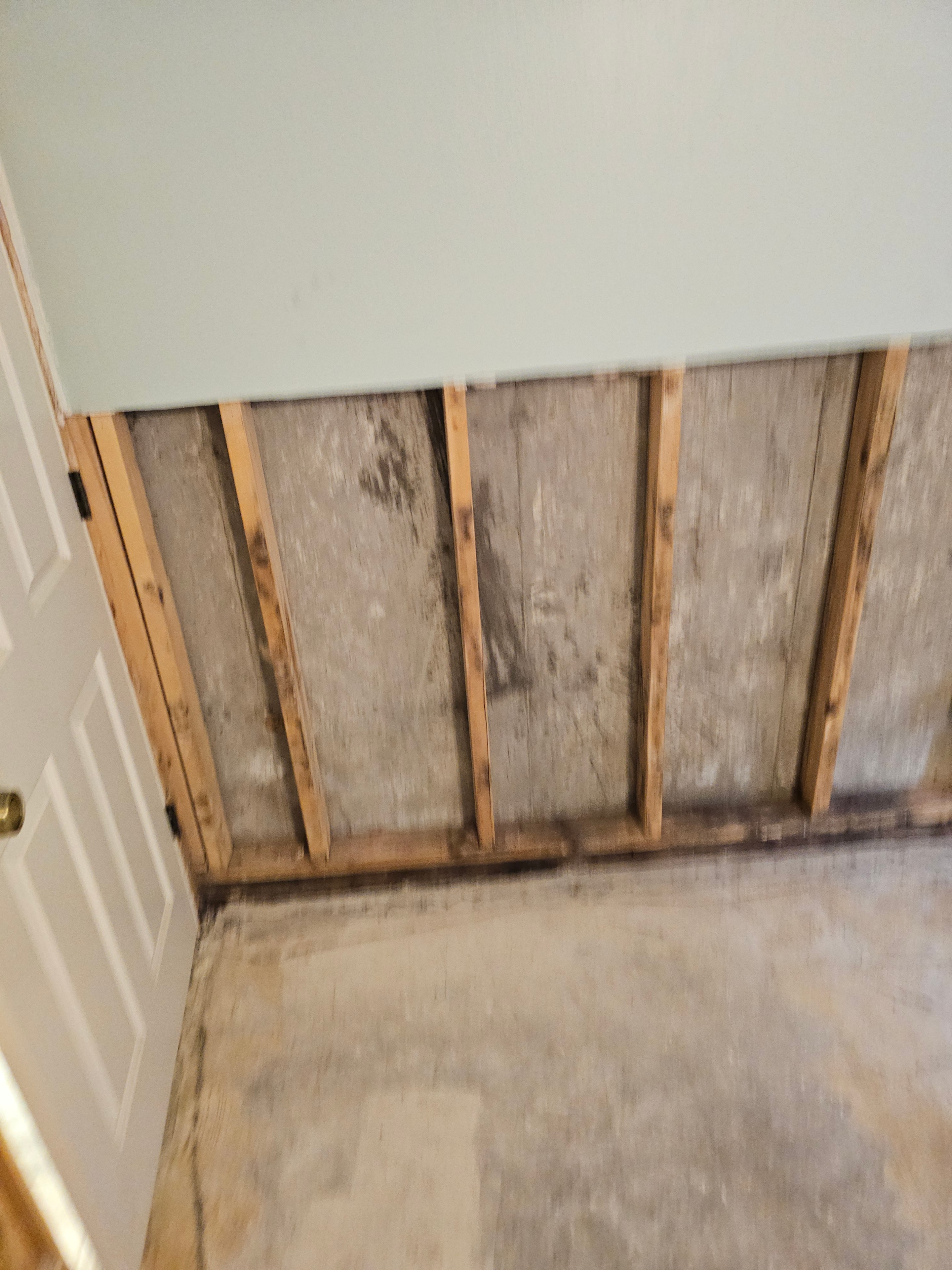
This photo shows the post-remediation inspection. The affected area has been cleared of all mold-contaminated materials. The exposed framing has been treated with antimicrobial solution and HEPA-vacuumed. Moisture readings have returned to normal levels.
Before we close any wall or replace any flooring, we conduct a thorough visual inspection of all exposed surfaces. We are looking for:
- Any remaining visible mold growth
- Any areas that were missed during removal
- Moisture readings confirming the structure is dry
- Evidence that the original water source has been addressed
On this job, the post-remediation inspection confirmed that the affected area was clean and dry. The structure was ready for reconstruction.
A note on clearance testing: For jobs involving significant mold growth, or when clients have health concerns or need documentation for insurance or real estate transactions, we recommend post-remediation air quality testing by an independent industrial hygienist. This provides third-party verification that mold spore counts have returned to normal levels. We can provide referrals to qualified testing professionals.
Photo 10: Ready for Reconstruction
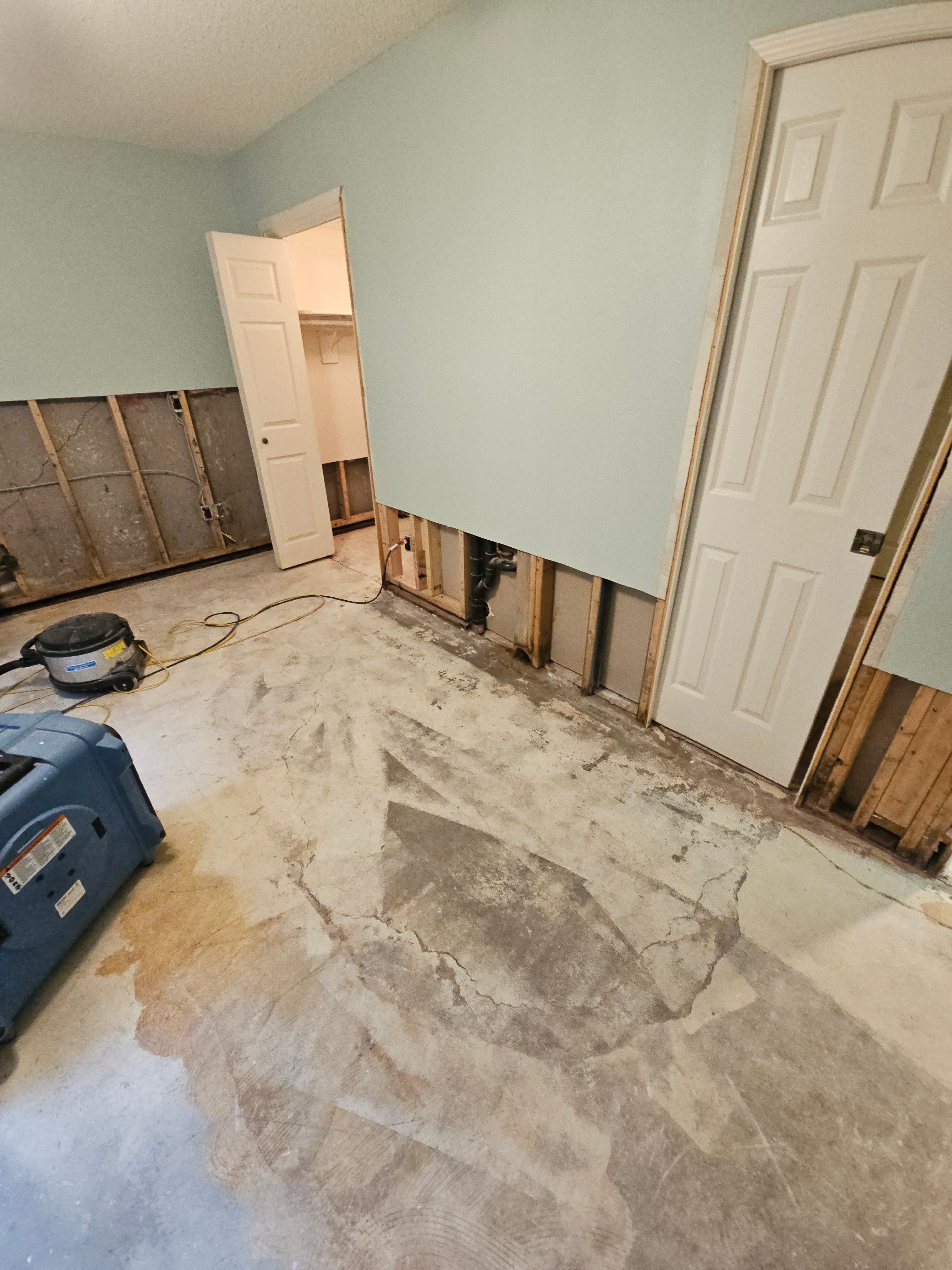
The final photo: clean, dry framing ready for reconstruction. This is what a properly completed water damage and mold remediation job looks like before the walls go back up.
From this point, the homeowner can proceed with confidence:
- All mold-contaminated materials have been removed
- All structural materials have been treated and verified clean
- The structure has been dried to normal moisture levels
- Documentation has been provided for insurance purposes
- The original water source has been identified and addressed
The reconstruction phase — new drywall, new flooring, painting — can now proceed on a clean, dry, mold-free substrate.
What This Job Cost — And What It Would Have Cost to Wait
The homeowner on this job had been aware of the musty smell for approximately three weeks before calling us. In that three weeks, the mold had spread from the initial water intrusion point to the adjacent wall cavity and framing.
Had they called us when the smell first appeared, the job would have been smaller, faster, and less expensive. The mold would have been limited to a smaller area. Less drywall would have needed removal. The framing treatment would have been more straightforward.
This is the most important lesson from this job: water damage and mold do not get better on their own. Every day you wait, the damage grows. The 24–72 hour window for preventing mold growth after water damage is real. After that window closes, you are not preventing mold — you are remediating it.
If you smell something musty, or if you have had any water intrusion in the past several months, call us. An assessment costs nothing. Waiting costs more every day.
About Absolute Floors & More — Water Damage & Mold Remediation
Absolute Floors & More is owned and operated by Nathaniel Lemieux, a U.S. Marine Corps veteran who has been serving Colorado Springs homeowners since 2014. We are IICRC certified, and we bring the same discipline and attention to detail from military service to every job we take on.
We serve Colorado Springs, Fountain, Pueblo, Monument, Castle Rock, Woodland Park, Peyton, Falcon, Calhan, Palmer Lake, Manitou Springs, Security-Widefield, Cimarron Hills, Black Forest, and every community within our 50-mile service radius.
24/7 emergency response for water damage. Call (719) 896-6274.
All photos in this post were taken by the Absolute Floors & More team on an actual job site in Colorado Springs. No stock images were used. Client privacy has been maintained — no identifying information about the property or homeowner is included.
Explore Topics
Written by
Nathaniel Lemieux
Content creator and writer sharing insights and stories.

