
Mold Damage in Colorado Springs: The Dangers, The Smell, How to Remediate It, and Who to Call
Mold damage is one of the most dangerous — and most misunderstood — problems a Colorado Springs homeowner can face. From the toxic health effects and the unforgettable smell to full professional remediation, here is everything you need to know, and why Absolute Floors & More serves every city within 50 miles.
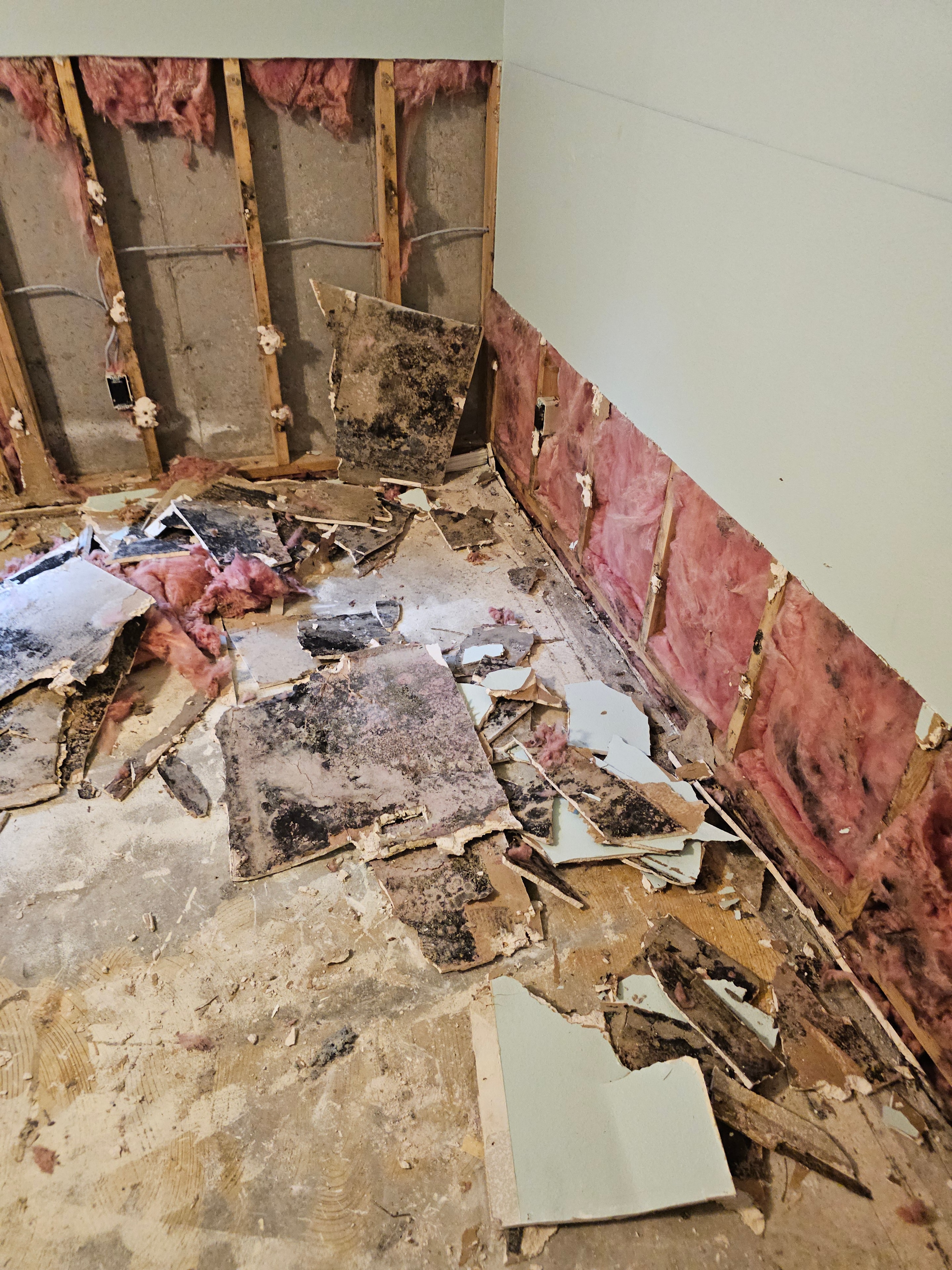
There is a smell that every homeowner who has dealt with serious mold damage remembers for the rest of their life.
It is not just musty. It is not the smell of an old basement or a damp towel left in a gym bag. It is something deeper, heavier, and more alive than that — a thick, earthy, almost sweet rot that gets into your sinuses and stays there. It is the smell of a living organism consuming your home from the inside out. And once you know what it is, you cannot unknow it.
At Absolute Floors & More — we have walked into hundreds of homes across Colorado Springs, Fountain, Pueblo, Monument, Castle Rock, Woodland Park, Peyton, Falcon, Calhan, Palmer Lake, Manitou Springs, Security-Widefield, Cimarron Hills, Black Forest, and every city within our 50-mile service radius. We have seen mold in crawl spaces, behind drywall, under flooring, inside HVAC systems, and in places homeowners never thought to look. We have seen what it does to buildings. We have seen what it does to families.
This guide is everything you need to know — the dangers, the smell, the remediation process, what to look for in a company, and why getting it right the first time is not optional.
What Is Mold and Why Does It Grow in Colorado Homes?
Mold is a fungus. There are thousands of species, and they all share one thing in common: they need moisture to survive. Give mold water, an organic food source (drywall paper, wood framing, carpet backing, insulation), and a temperature between 40°F and 100°F, and it will grow. It does not need sunlight. It does not need air circulation. It just needs moisture — and Colorado Springs gives it plenty of opportunities.
Despite Colorado's reputation as a dry, high-altitude state, homes here face serious moisture risks:
- Snowmelt and spring runoff that seeps through foundations, window wells, and crawl space vents
- Sudden summer thunderstorms that overwhelm gutters, downspouts, and drainage systems
- Burst pipes and slow leaks inside walls that go undetected for weeks or months
- Swamp coolers and humidifiers that introduce moisture into the air supply
- Basement flooding from the clay-heavy soils common throughout El Paso County and Pueblo County
- Ice dams on roofs during freeze-thaw cycles that force water under shingles and into attic spaces
- Plumbing failures in older homes throughout the Westside, Old Colorado City, and Pueblo's historic neighborhoods
The combination of cold winters, intense summer monsoons, and aging housing stock in many Colorado Springs neighborhoods creates ideal conditions for mold growth — especially when water damage is not addressed within the critical 24-to-72-hour window.
The Dangers of Mold: What It Actually Does to Your Body
Most people have heard that mold is bad for you. Fewer people understand exactly how bad — or why the health effects vary so dramatically from person to person.
Mycotoxins: The Real Threat
The most dangerous molds — including Stachybotrys chartarum (black mold), Aspergillus, and Chaetomium — produce mycotoxins: chemical compounds that are toxic to humans and animals. These are not allergens. They are not irritants. They are toxins, and they can cause serious, lasting damage to the respiratory system, the nervous system, and the immune system.
Mycotoxins become airborne when mold colonies are disturbed — by foot traffic, HVAC airflow, or improper DIY removal attempts. Once airborne, they are inhaled directly into the lungs and absorbed through the mucous membranes.
Health Effects by Exposure Level
Short-term exposure (days to weeks):
- Persistent coughing and sneezing
- Itchy, watery, or burning eyes
- Skin rashes and hives
- Headaches and sinus pressure
- Fatigue and brain fog
- Worsening of existing asthma or allergy symptoms
Medium-term exposure (weeks to months):
- Chronic respiratory infections
- Persistent sinus infections that do not respond to antibiotics
- Shortness of breath and chest tightness
- Memory problems and difficulty concentrating
- Nausea and digestive issues
- Immune system suppression
Long-term or high-concentration exposure:
- Pulmonary hemorrhage (bleeding in the lungs) — documented in infants and young children
- Neurological damage including tremors, mood disorders, and cognitive decline
- Hypersensitivity pneumonitis (a serious inflammatory lung condition)
- Permanent sensitization to mold spores, meaning even low-level future exposure triggers severe reactions
Who Is Most at Risk
Children under five, adults over 65, pregnant women, and anyone with a compromised immune system — including people undergoing chemotherapy, living with HIV/AIDS, or taking immunosuppressive medications — face the most severe health consequences from mold exposure. But healthy adults are not immune. We have seen strong, healthy people become seriously ill after months of unknowing exposure in a mold-contaminated home.
If anyone in your household is experiencing unexplained respiratory symptoms, chronic fatigue, or recurring headaches, and you have had any water damage in the past two years, mold should be on your list of suspects.
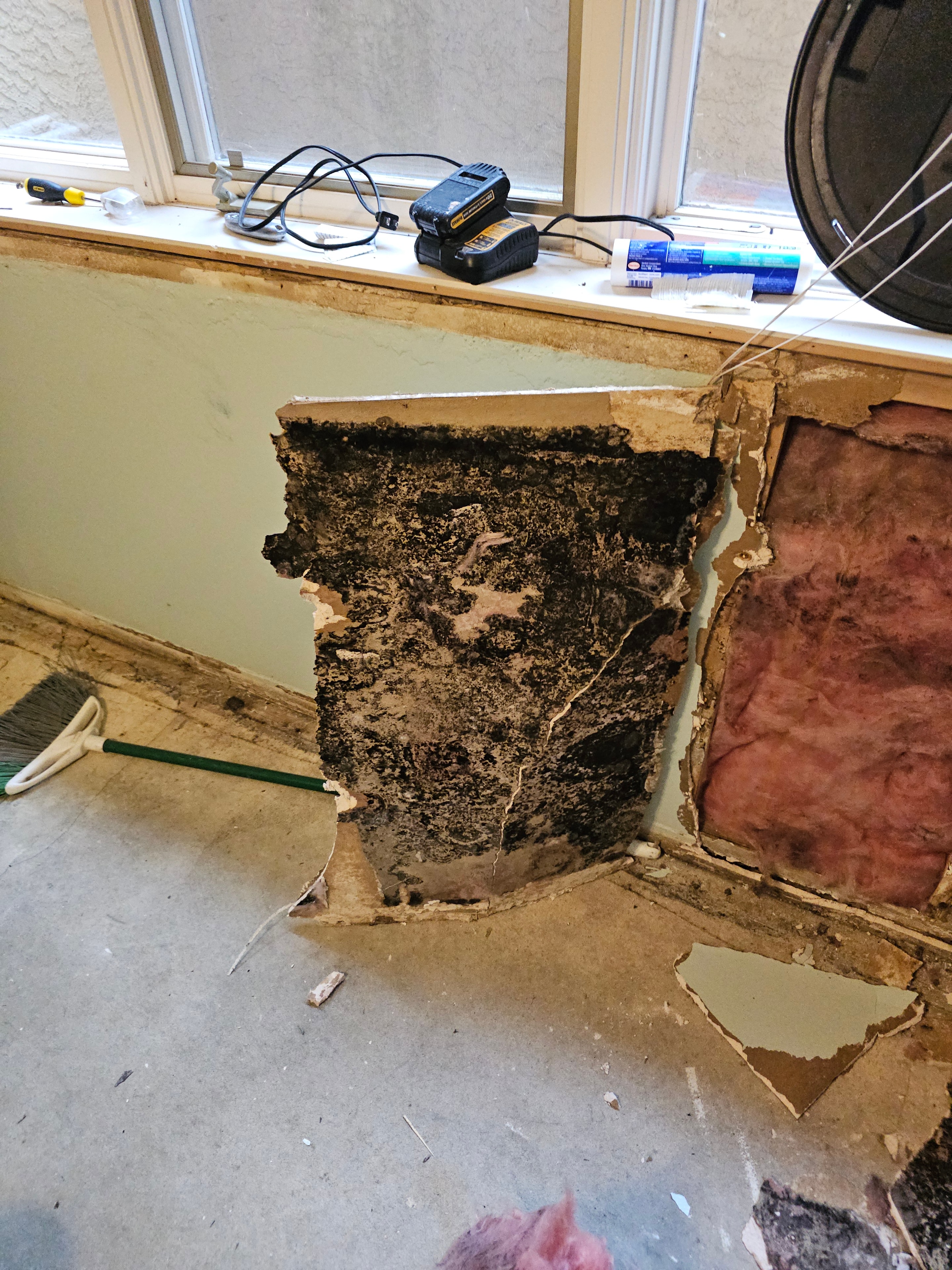
The Smell of Mold: Why It Is So Distinctive — and So Dangerous
The smell of mold is one of the most reliable early warning signs of a serious problem — and one of the most misunderstood.
What Causes the Mold Smell
Mold produces microbial volatile organic compounds (MVOCs) as metabolic byproducts of digesting organic material. These are the chemicals responsible for the distinctive mold odor, and they include compounds like geosmin, 1-octen-3-ol, and various aldehydes and ketones.
The smell is often described as:
- Musty — like old books, a damp basement, or wet cardboard
- Earthy — like soil after rain, or rotting leaves
- Sweet and sour — a fermented quality that is hard to describe but impossible to forget
- Heavy and penetrating — it gets into fabric, furniture, clothing, and even your hair
The intensity of the smell does not always correlate with the size of the mold colony. A relatively small colony growing inside a wall cavity can produce an overwhelming odor because the MVOCs concentrate in the enclosed space and then release into the living area through gaps, outlets, and HVAC vents.
Why the Smell Keeps Coming Back
One of the most frustrating experiences homeowners report is cleaning visible mold with bleach or commercial products, only to have the smell return within days or weeks. This happens because:
-
Surface cleaning does not kill mold roots. Mold has hyphae — root-like structures — that penetrate porous materials like drywall, wood, and grout. Bleach kills surface spores but does not penetrate deep enough to kill the hyphae. The colony regrows from the roots.
-
The moisture source was not addressed. If the water intrusion that caused the mold is still present — a slow pipe leak, a foundation crack, condensation from an HVAC system — the mold will return regardless of how thoroughly the surface is cleaned.
-
Spores have spread to adjacent materials. Mold spores are microscopic and travel through air. By the time you can smell mold, spores have almost certainly spread to adjacent walls, flooring, insulation, and HVAC ductwork.
-
The contaminated materials were not removed. Drywall, insulation, and wood framing that have been colonized by mold cannot be cleaned — they must be physically removed and replaced.
When the Smell Is Worst
Mold odor is typically strongest:
- In the morning, when the home has been closed overnight and MVOCs have accumulated
- During and after rain, when humidity rises and mold colonies become more active
- When the HVAC system runs, distributing spore-laden air throughout the home
- In warm weather, when mold metabolism accelerates
- After any disturbance to the affected area — moving furniture, opening a wall, or running a fan
If you notice a mold smell that intensifies under any of these conditions, do not wait. Call a professional.
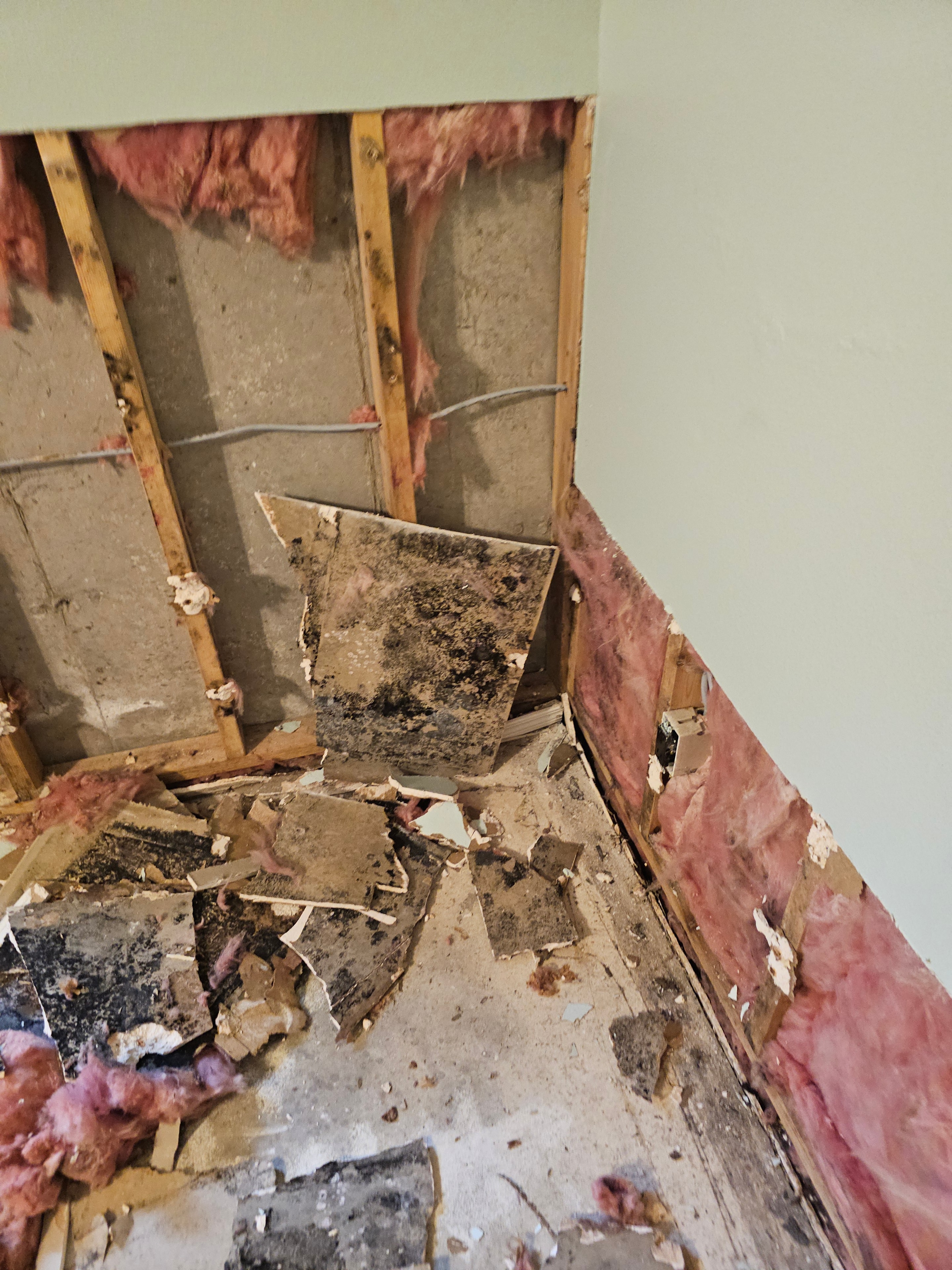
Where Mold Hides: The Places Colorado Springs Homeowners Miss
Visible mold — the black spots on a bathroom ceiling or the green growth on a basement wall — is actually the easy case. The mold you cannot see is the mold that causes the most damage and the most serious health consequences.
Behind Drywall and Inside Wall Cavities
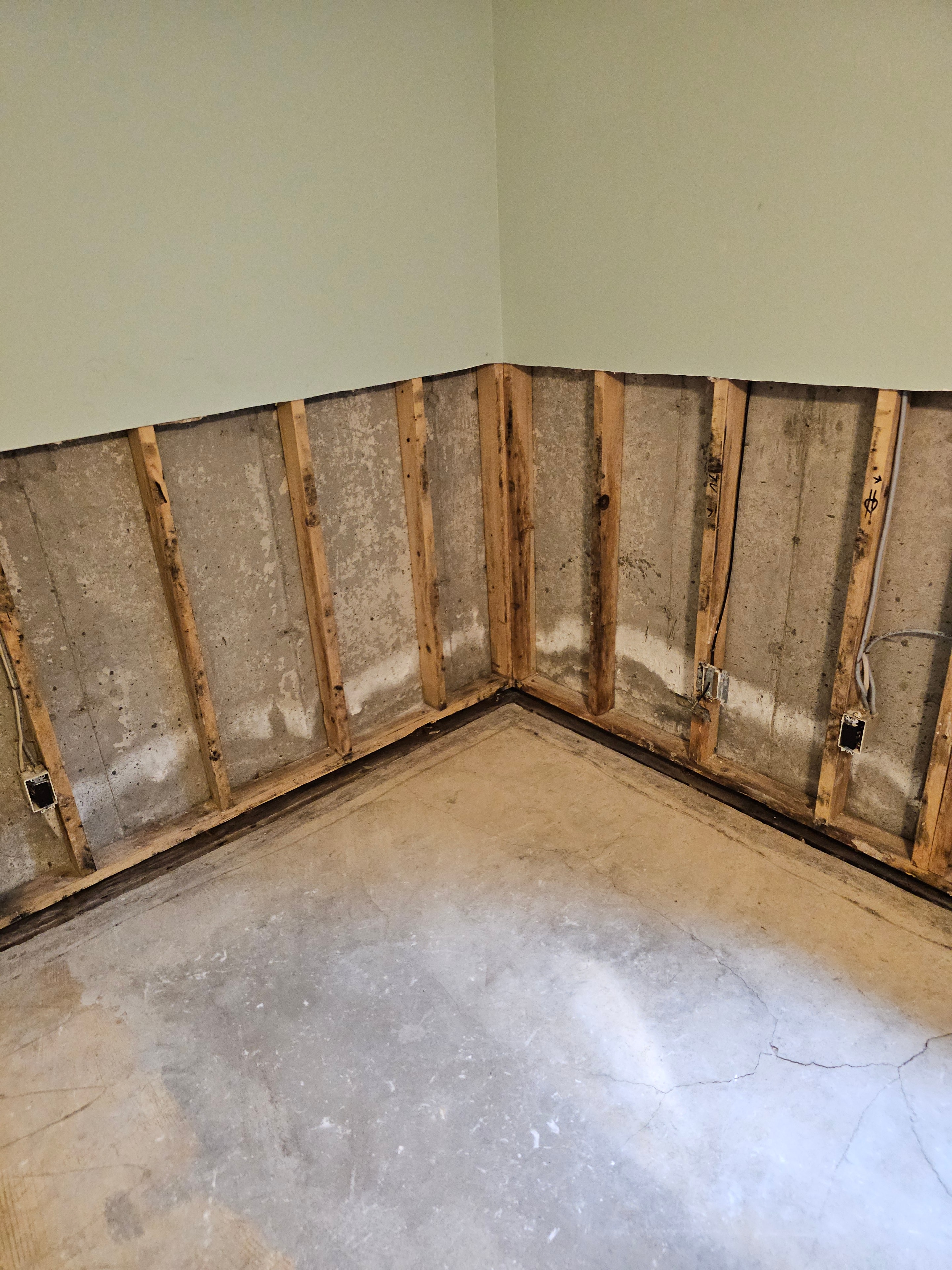
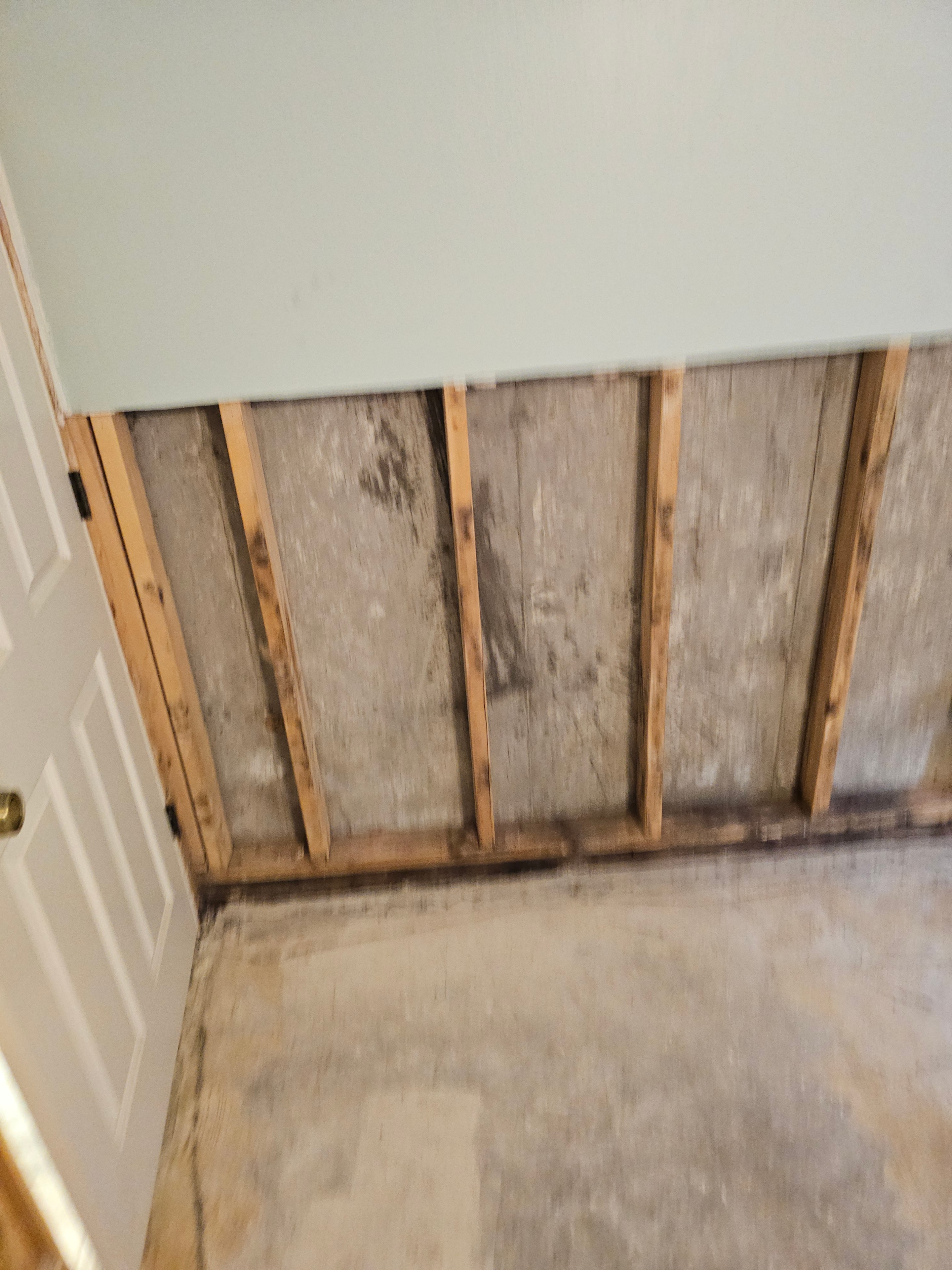
This is the most common location for serious mold infestations. A slow pipe leak, a window that leaks during rain, or a single flooding event that was not fully dried can saturate the paper facing of drywall and the wood framing behind it. The wall surface may look and feel completely normal while a massive mold colony grows in the dark, enclosed space behind it.
Signs of hidden wall mold:
- Persistent musty odor with no visible source
- Soft spots, bubbling, or discoloration on drywall
- Peeling paint or wallpaper
- Visible staining at the base of walls near the floor
Under Flooring and in Subfloor
Carpet, hardwood, laminate, and tile can all trap moisture against the subfloor. In Colorado Springs homes with basements or slab-on-grade construction, moisture wicking up from below is a constant risk. Mold in the subfloor is particularly dangerous because it is directly beneath the living space and its spores travel upward through flooring gaps.
In Crawl Spaces
Crawl spaces are the single most common location for serious mold infestations in Colorado Springs area homes. They are dark, poorly ventilated, and often have exposed soil that releases moisture year-round. Many crawl spaces in older homes throughout Fountain, Pueblo, and the Westside of Colorado Springs have never been properly encapsulated — and they show it.
Inside HVAC Systems and Ductwork
When mold grows inside an air handler, on evaporator coils, or inside ductwork, every time the system runs it distributes spores throughout the entire home. This is one of the most serious scenarios because it means every room in the house is being continuously contaminated. Symptoms often include occupants feeling better when they leave the home and worse when they return — a classic sign of HVAC-distributed mold.
In Attic Spaces
Attic mold is common in Colorado Springs homes where bathroom exhaust fans vent into the attic rather than to the exterior, or where roof leaks have gone undetected. The combination of warm air, moisture, and wood decking creates ideal mold conditions.
Around Windows and Sliding Glass Doors
Condensation on windows during Colorado's cold winters creates a persistent moisture source at the window frame and sill. Over time, this saturates the surrounding drywall and framing, creating hidden mold colonies that are often not discovered until a renovation or sale inspection.
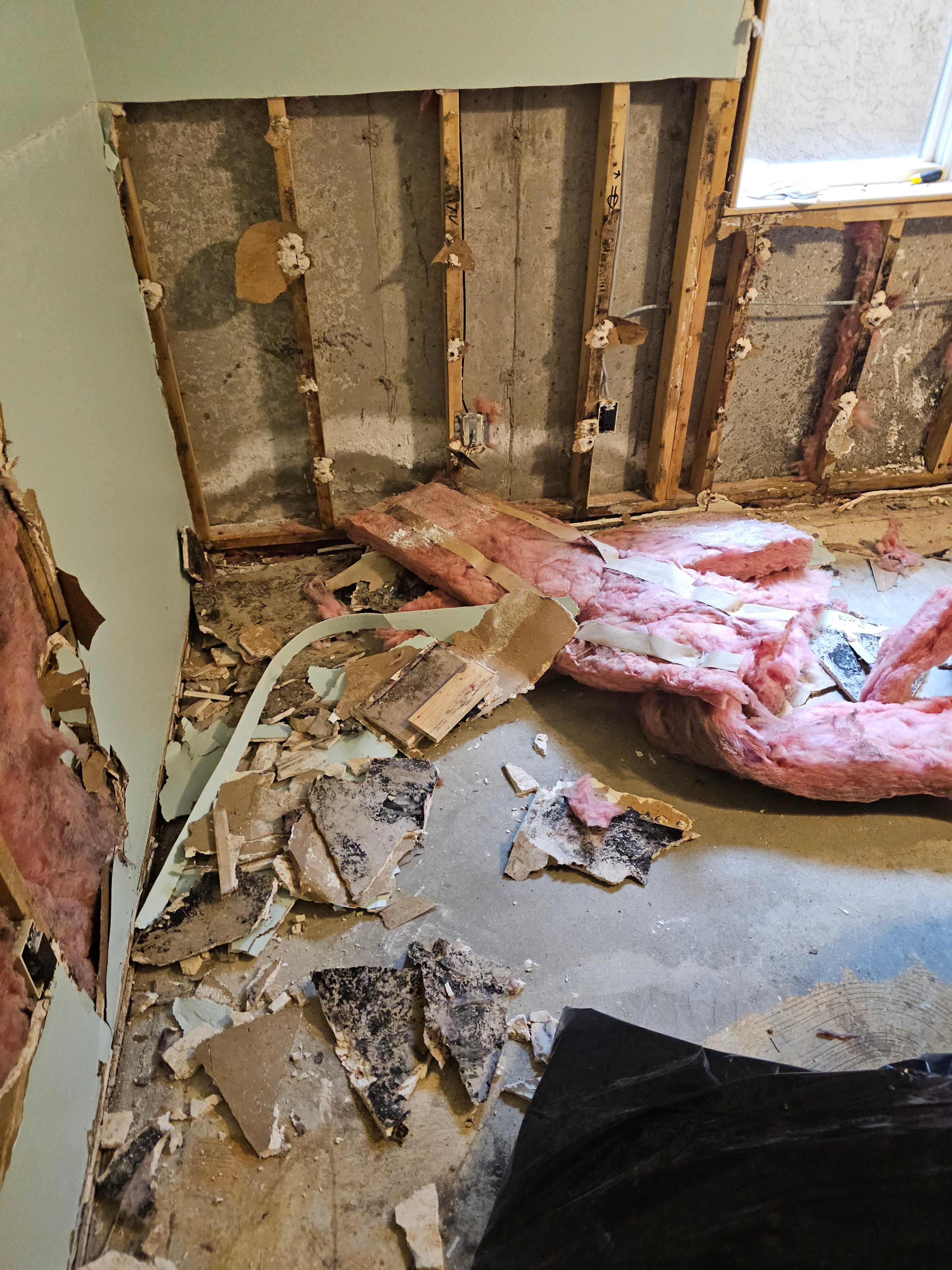
The Professional Mold Remediation Process: What It Actually Involves
Professional mold remediation is not cleaning. It is not spraying bleach on a wall and calling it done. It is a structured, multi-step process that addresses the mold, the moisture source, the contaminated materials, and the air quality — in that order.
Here is what a proper professional remediation looks like:
Step 1: Assessment and Testing
Before any work begins, a qualified technician conducts a thorough inspection of the affected area and the surrounding structure. This includes:
- Visual inspection of all accessible surfaces
- Moisture mapping using thermal imaging cameras and moisture meters to identify wet areas that are not visible to the naked eye
- Air quality sampling to measure spore counts and identify mold species
- Surface sampling of suspected mold colonies for laboratory analysis
The assessment determines the scope of the contamination, identifies the moisture source, and establishes a remediation plan. Skipping this step — or hiring a company that skips it — is one of the most common reasons mold comes back after remediation.
Step 2: Containment
Before any mold is disturbed, the affected area must be contained to prevent spores from spreading to unaffected parts of the home. Professional containment includes:
- Negative air pressure using HEPA-filtered air scrubbers that create a pressure differential, pulling air out of the containment zone rather than allowing it to escape
- Polyethylene sheeting sealing off doorways, HVAC vents, and any other openings between the work area and the rest of the home
- Decontamination chambers at the entry point to the work area, allowing workers to remove contaminated PPE before re-entering the living space
This step is non-negotiable. Disturbing mold without proper containment releases billions of spores into the air and can turn a localized problem into a whole-house contamination.
Step 3: Personal Protective Equipment
Proper remediation requires full PPE for every worker in the containment zone:
- N-95 or P-100 respirators (full-face respirators for heavy contamination)
- Disposable Tyvek suits
- Nitrile gloves
- Eye protection
Any company that sends workers into a mold-contaminated space without full PPE is not doing professional remediation — they are doing a cleanup that will likely fail.
Step 4: Source Elimination
The moisture source must be identified and corrected before any remediation work begins. This may involve:
- Repairing or replacing leaking pipes
- Waterproofing foundation walls or crawl spaces
- Correcting grading and drainage around the foundation
- Repairing roof leaks or ice dam damage
- Replacing failed window seals or flashing
If the moisture source is not corrected, mold will return. Every time. Without exception.
Step 5: Removal of Contaminated Materials
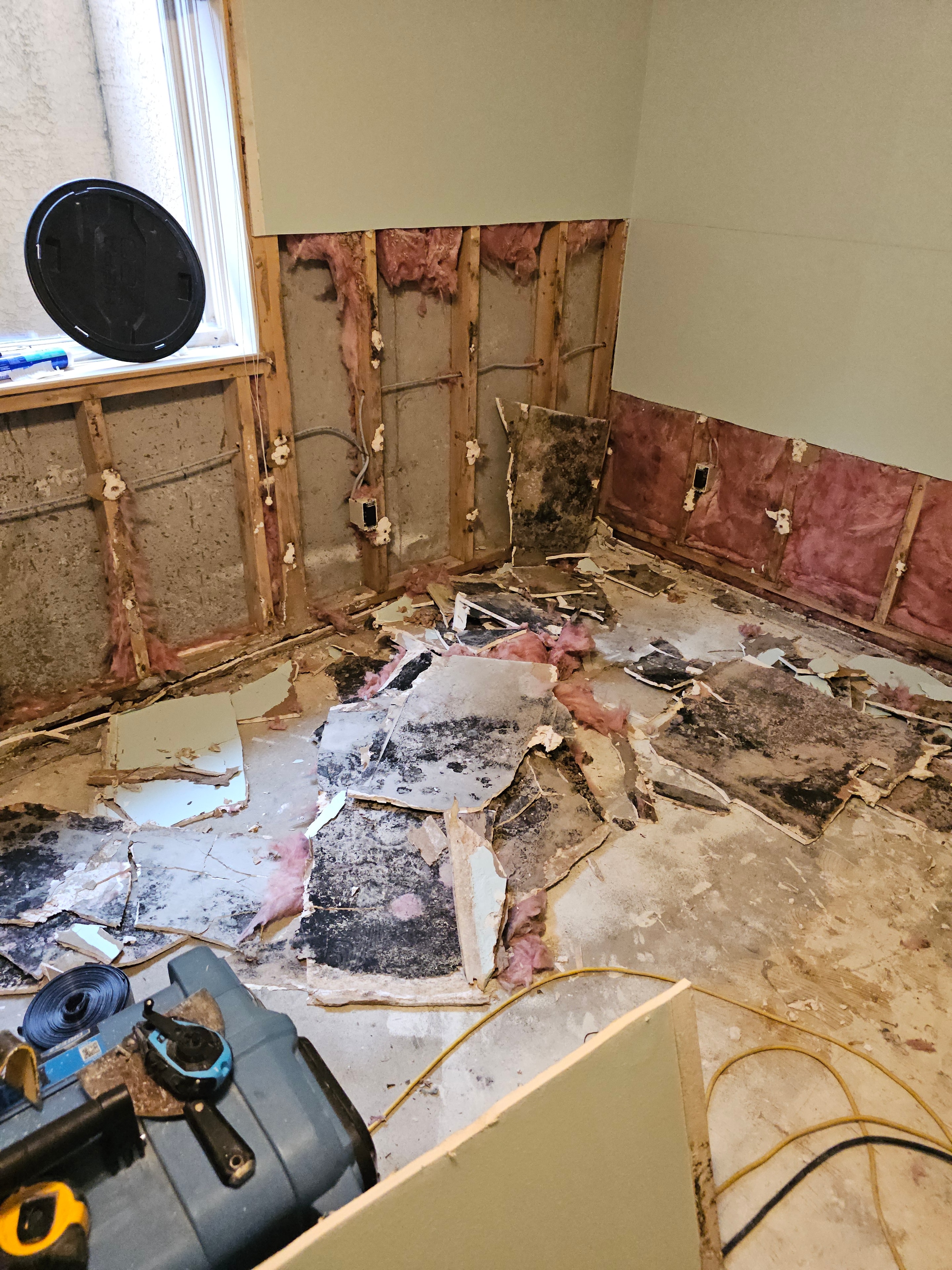
Porous materials that have been colonized by mold cannot be cleaned — they must be physically removed. This typically includes:
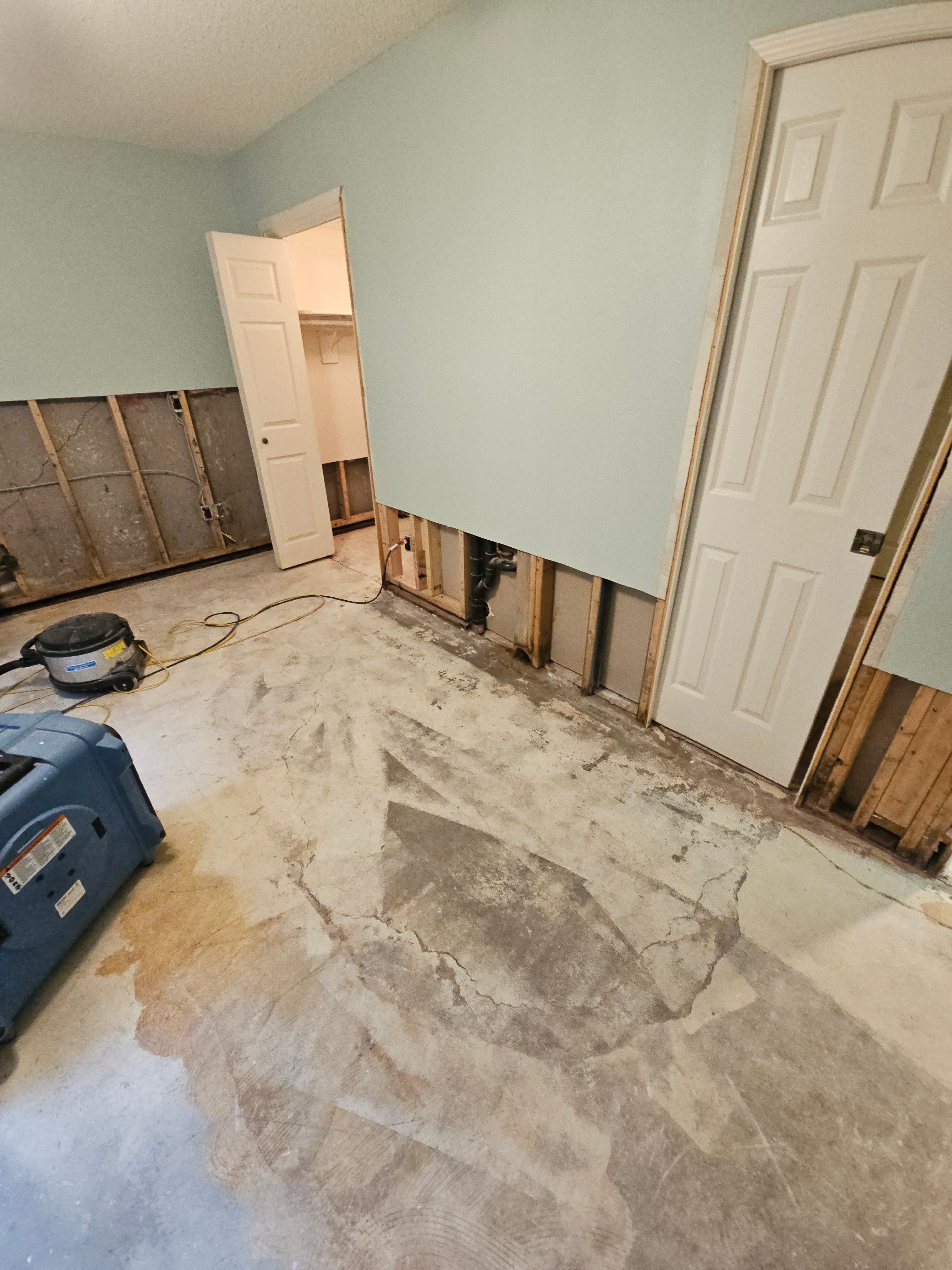
- Drywall (cut back to clean, dry framing — usually 12 to 24 inches beyond the visible contamination)
- Insulation
- Carpet and carpet padding
- Wood framing that cannot be adequately treated (in severe cases)
- Ceiling tiles
All removed materials are double-bagged in heavy-duty polyethylene bags, sealed, and disposed of as contaminated waste — not placed in open trash containers or dumpsters where spores can escape.
Step 6: HEPA Vacuuming and Antimicrobial Treatment
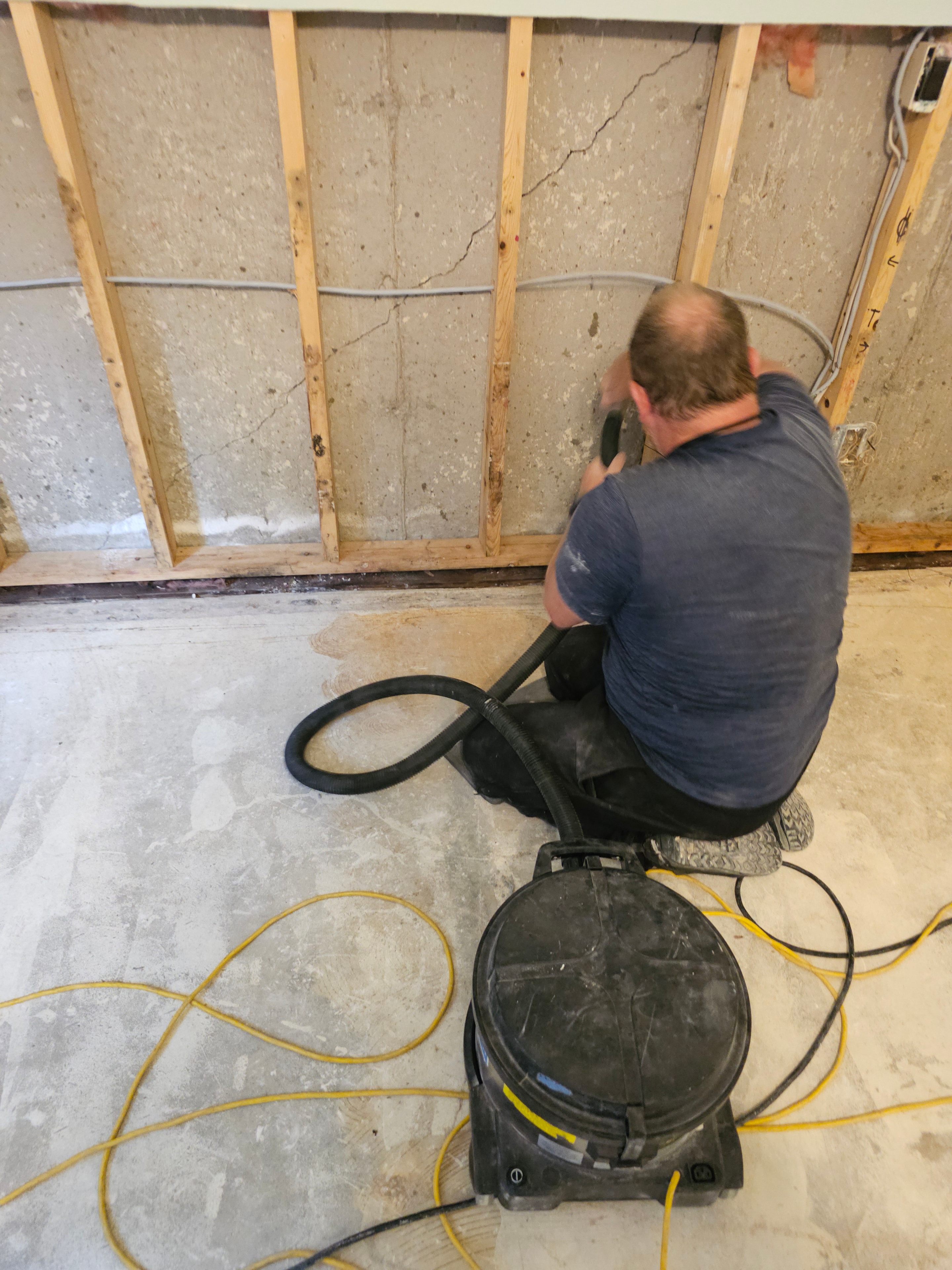
After contaminated materials are removed, all remaining surfaces in the work area are HEPA-vacuumed to remove residual spores, then treated with an EPA-registered antimicrobial solution. This is applied to:
- Exposed framing and structural members
- Concrete and masonry surfaces
- HVAC components within the work area
The antimicrobial treatment inhibits future mold growth but is not a substitute for removing contaminated materials — it is a final treatment step, not a primary remediation method.
Step 7: Air Scrubbing and Clearance Testing
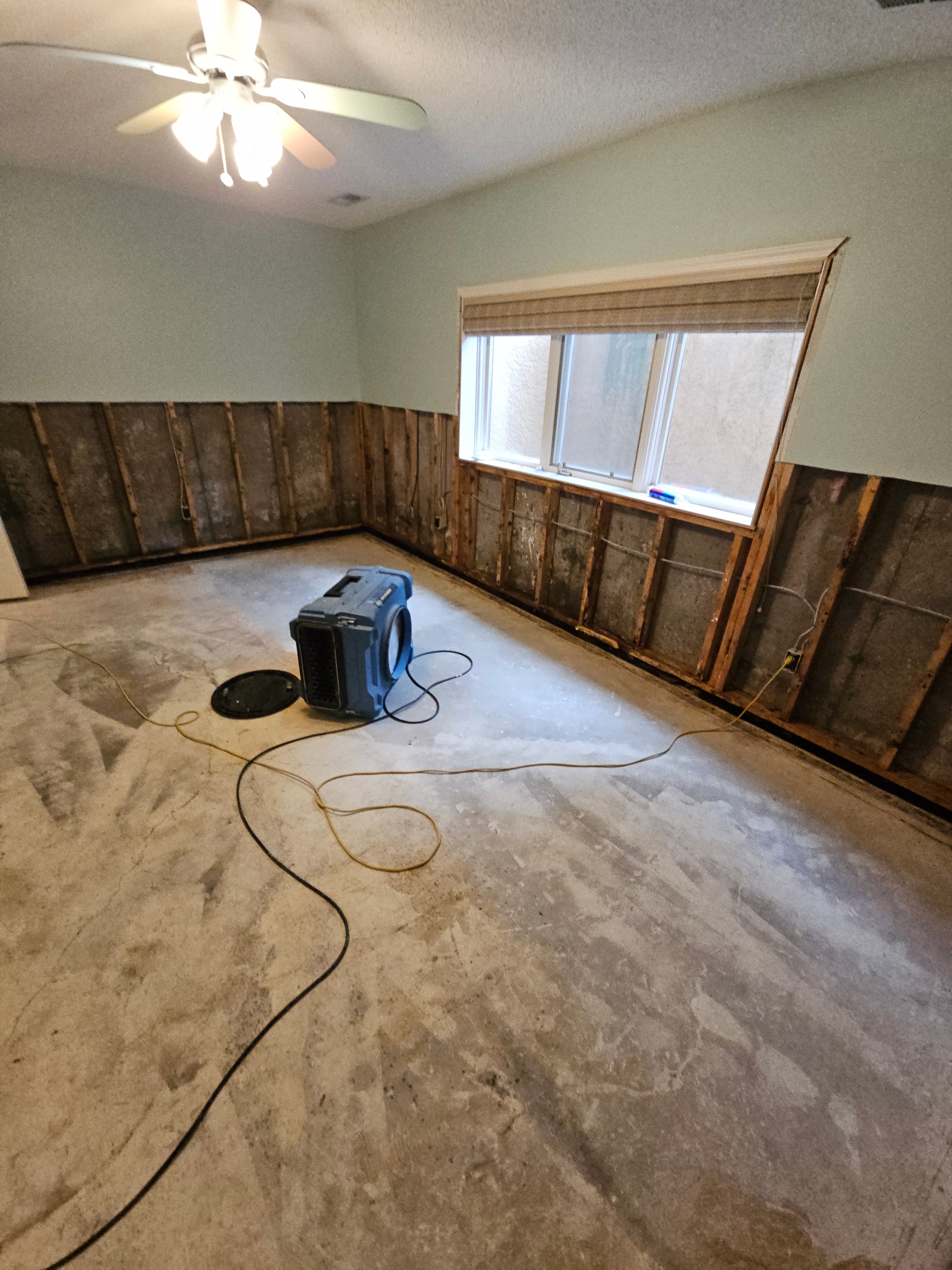
After remediation is complete and before containment is removed, the work area is air-scrubbed with HEPA-filtered equipment for a minimum period to reduce airborne spore counts. Clearance testing — air and surface sampling — is then conducted to verify that spore counts have returned to normal background levels.
A reputable company will not release a remediation job without passing clearance testing. If a company does not offer or require clearance testing, walk away.
Step 8: Reconstruction
Once the area passes clearance testing, reconstruction begins — new drywall, insulation, flooring, and finishes. A full-service restoration company handles both the remediation and the reconstruction, so you are not left with an open wall cavity and a list of contractors to call.
Why DIY Mold Removal Almost Always Fails
We understand the impulse. You see mold on a wall, you go to the hardware store, you buy a bottle of mold killer and a box of gloves, and you get to work. It feels like you are solving the problem. You are not.
Here is why DIY mold removal fails in the vast majority of cases:
1. You cannot see all of it. The visible mold is almost never the full extent of the contamination. Without moisture meters, thermal cameras, and air sampling, you are treating the surface while the real colony continues to grow behind it.
2. Bleach does not kill mold on porous surfaces. This is one of the most persistent myths in home maintenance. Bleach is effective on non-porous surfaces like tile and glass. On drywall, wood, and grout, the water in the bleach solution actually penetrates the material and feeds the mold while the chlorine evaporates off the surface. The mold comes back stronger.
3. You will spread spores throughout your home. Without containment and negative air pressure, scrubbing or sanding mold releases enormous quantities of spores into the air. Those spores travel through your HVAC system and settle on every surface in your home.
4. You are not protected. Spending an afternoon scrubbing mold without a proper respirator, eye protection, and disposable clothing exposes you to a concentrated dose of mycotoxins and spores. The health consequences can be serious and long-lasting.
5. You will not fix the moisture source. Most homeowners who attempt DIY mold removal do not have the tools or expertise to identify and correct the underlying moisture problem. Without fixing the source, the mold returns within weeks.
6. It can cost you more in the long run. Improper DIY remediation can spread contamination, void homeowner's insurance claims, and create disclosure problems when you sell your home. A job that could have been remediated for a few thousand dollars can become a six-figure problem if it is allowed to spread or is improperly handled.
What to Look for in a Mold Remediation Company
Not all mold remediation companies are equal. In fact, the gap between a qualified professional and an unqualified one is enormous — and choosing the wrong company can leave you with a bigger problem than you started with. Here is exactly what to look for:
1. IICRC Certification
The Institute of Inspection, Cleaning and Restoration Certification (IICRC) is the gold standard for the restoration industry. Look specifically for technicians certified in:
- WRT (Water Damage Restoration Technician)
- ASD (Applied Structural Drying Technician)
- AMRT (Applied Microbial Remediation Technician)
IICRC certification means the technician has completed formal training, passed written examinations, and is held to a documented standard of care. It is not a guarantee of quality, but its absence is a red flag.
2. Proper Licensing and Insurance
In Colorado, mold remediation contractors should carry:
- General liability insurance (minimum $1 million per occurrence)
- Workers' compensation insurance for all employees
- Contractor's license as required by the municipality
Ask for certificates of insurance before any work begins. A company that cannot or will not provide them should not be in your home.
3. A Written Scope of Work
Before any remediation begins, you should receive a detailed written scope of work that includes:
- The specific areas to be remediated
- The methods and materials to be used
- The containment protocol
- The clearance testing procedure
- The timeline and payment schedule
Any company that wants to start work without a written scope is not operating professionally.
4. Independent Clearance Testing
The company that performs the remediation should not be the same company that performs the clearance testing. This is a conflict of interest. A reputable company will either use an independent industrial hygienist for clearance testing or will welcome you to hire one independently. If a company insists on doing its own clearance testing with no independent verification, be skeptical.
5. Transparent Pricing
Mold remediation pricing varies based on the scope of contamination, the materials affected, and the complexity of the job. A reputable company will provide a detailed written estimate after a thorough assessment — not a price over the phone based on a description. Be wary of:
- Unusually low bids (often a sign of incomplete work or unqualified technicians)
- Unusually high bids without a clear explanation of scope
- Companies that pressure you to sign immediately or claim the situation is more urgent than it is
6. Experience with Colorado's Specific Conditions
Colorado's climate — high altitude, dramatic temperature swings, heavy snowmelt, intense summer storms — creates mold scenarios that are different from those in humid coastal climates. A company with deep experience in Colorado Springs, Pueblo, and the Front Range understands these conditions and knows where to look.
7. Full-Service Capability
The best outcome for you as a homeowner is a single company that can handle the entire process: water extraction, structural drying, mold remediation, and reconstruction. Coordinating multiple contractors for a single job creates gaps in accountability, delays in the timeline, and opportunities for each contractor to blame the others when something goes wrong.
8. References and Reviews
Ask for references from recent jobs in your area. Check Google reviews, the Better Business Bureau, and HomeAdvisor. Look specifically for reviews that mention the company's thoroughness, communication, and whether the mold came back after remediation.
The 24-to-72-Hour Rule: Why Speed Is Everything
When water enters your home — from a burst pipe, a flooding event, a roof leak, or a sewage backup — you have a window of 24 to 72 hours before mold begins to colonize wet materials. This is not a guideline. It is a biological reality.
At temperatures above 40°F, mold spores (which are present in every home and in the outdoor air) will begin to germinate on wet organic materials within 24 to 48 hours. By 72 hours, active colonies are established. By one week, the contamination can be extensive enough to require significant structural demolition.
This is why water damage and mold damage are inseparable. Every water damage event is a potential mold event. Every hour of delay increases the scope — and the cost — of the remediation.
When you call Absolute Floors & More, we respond immediately. We deploy truck-mounted extraction equipment, industrial air movers, and commercial dehumidifiers to remove water and dry the structure as fast as physically possible. Our goal is always to get inside that 72-hour window and prevent mold from establishing — because preventing mold is always faster, cheaper, and less disruptive than remediating it after the fact.
Mold Damage, Water Damage, and Flood Damage: Our Full Service Area
Absolute Floors & More brings the same team, the same values, and the same commitment to doing the job right — applied to water damage, flood damage, and mold remediation.
We serve every city, town, and community within a 50-mile radius of Colorado Springs, including:
El Paso County
Colorado Springs (zip codes 80901, 80902, 80903, 80904, 80905, 80906, 80907, 80908, 80909, 80910, 80911, 80912, 80913, 80914, 80915, 80916, 80917, 80918, 80919, 80920, 80921, 80922, 80923, 80924, 80925, 80926, 80927, 80928, 80929, 80930, 80931, 80932, 80933, 80934, 80935, 80936, 80937, 80938, 80939, 80941, 80942, 80944, 80945, 80946, 80947, 80949, 80950, 80951) · Fountain (80817) · Security-Widefield (80911) · Cimarron Hills (80915) · Black Forest (80908) · Falcon (80831) · Peyton (80831) · Calhan (80808) · Ellicott (80808) · Yoder (80864) · Ramah (80832) · Simla (80835) · Limon (80828) · Rush (80833) · Matheson (80830) · Elbert (80106) · Kiowa (80117) · Elizabeth (80107)
Douglas County
Castle Rock (80104, 80108, 80109) · Castle Pines (80108) · Parker (80134, 80138) · Franktown (80116) · Larkspur (80118) · Monument (80132, 80133) · Palmer Lake (80133)
Teller County
Woodland Park (80863, 80866) · Divide (80814) · Cripple Creek (80813) · Victor (80860) · Florissant (80816) · Lake George (80827)
Pueblo County
Pueblo (81001, 81002, 81003, 81004, 81005, 81006, 81007, 81008) · Pueblo West (81007) · Beulah (81023) · Rye (81069) · Colorado City (81019)
Fremont County
Cañon City (81212) · Florence (81226) · Penrose (81240)
Other Communities
Manitou Springs (80829) · Green Mountain Falls (80819) · Cascade (80809) · Chipita Park (80809) · Crystola (80813) · Westcliffe (81252) · Silver Cliff (81252) · Walsenburg (81089) · La Junta (81050) · Rocky Ford (81067) · Ordway (81063) · Fowler (81039) · Manzanola (81058) · Olney Springs (81062) · Crowley (81033) · Boone (81025) · Avondale (81022) · Vineland (81006)
If you are within 50 miles of Colorado Springs, we come to you. No extra travel fees. Same team. Same standard of care.
Common Mold Scenarios We See in Colorado Springs Homes
Over the years, we have responded to thousands of water and mold calls across the Front Range. Here are the scenarios we see most often:
Basement Flooding After Heavy Rain
Colorado Springs sits on clay-heavy soils that do not drain well. During the intense summer monsoon season — typically July through September — heavy rainfall can overwhelm foundation drainage systems and force water through basement walls, window wells, and floor drains. If the water is not extracted and the structure dried within 72 hours, mold is almost certain.
Most affected areas: Briargate, Stetson Hills, Northgate, Powers Corridor, Fountain, Security-Widefield, Pueblo West
Burst Pipes During Winter Cold Snaps
Colorado Springs experiences dramatic temperature swings, and pipes in exterior walls, crawl spaces, and unheated garages are vulnerable to freezing. A burst pipe can release hundreds of gallons of water into a wall cavity or subfloor before it is discovered. The combination of cold temperatures (which slow drying) and enclosed spaces (which trap moisture) makes these events particularly prone to mold.
Most affected areas: Older homes in Old Colorado City, the Westside, Manitou Springs, Pueblo's historic neighborhoods, Cañon City
Roof Leaks and Ice Dams
Ice dams form when heat escaping through the roof melts snow, which then refreezes at the cold eaves. The resulting ice backup forces water under shingles and into the attic and wall cavities. By the time the leak is discovered — often as a water stain on a ceiling — mold may already be established in the attic decking and insulation.
Most affected areas: Monument, Palmer Lake, Woodland Park, Black Forest, higher-elevation neighborhoods
Crawl Space Moisture
Homes with crawl spaces — common throughout Fountain, Pueblo, and older Colorado Springs neighborhoods — are particularly vulnerable to mold from ground moisture. Without proper encapsulation and vapor barriers, moisture from the soil wicks into the crawl space year-round, creating ideal mold conditions in the floor joists and subfloor.
HVAC Condensate Line Failures
Air conditioning systems produce condensate water that is normally drained away through a condensate line. When that line clogs or fails, water backs up into the air handler and overflows into the surrounding structure. Because air handlers are often located in closets, attics, or utility rooms, the leak can go undetected for weeks — long enough for significant mold growth.
How to Prevent Mold in Your Colorado Springs Home
The best mold remediation is the mold that never happens. Here are the most effective prevention strategies for Colorado Springs area homes:
Control indoor humidity. Keep indoor relative humidity between 30% and 50%. Use a hygrometer to monitor levels. In Colorado's dry climate, this is usually not a problem in summer — but swamp coolers and humidifiers can push humidity too high.
Address water intrusion immediately. Any water that enters your home — from any source — should be extracted and the affected area dried within 24 hours. Do not wait to see if it dries on its own.
Maintain your gutters and downspouts. Clogged gutters overflow and direct water toward the foundation. Downspouts should extend at least six feet from the foundation.
Ensure proper grading. The ground around your foundation should slope away from the house at a rate of at least one inch per foot for the first six feet.
Encapsulate your crawl space. A properly encapsulated crawl space with a vapor barrier, sealed vents, and a dehumidifier eliminates the most common source of chronic moisture in Colorado homes.
Inspect your roof annually. Look for missing or damaged shingles, failed flashing around chimneys and vents, and signs of ice dam damage after winter.
Vent bathroom fans to the exterior. Every bathroom exhaust fan should vent to the outside of the home — not into the attic.
Know where your main water shutoff is. In the event of a burst pipe, every second counts. Know where your shutoff is and make sure every adult in the household knows too.
Why Colorado Springs Homeowners Choose Absolute Water Damage & Mitigation
We are not a national franchise. We are not a call center that dispatches whoever is available. We are a locally owned, veteran-operated company that has been serving Colorado Springs and the surrounding 50-mile radius since 2014. When you call us, you get Nate, Brandon, Bruce, and a team that has been doing this work together for years.
Here is what sets us apart:
IICRC Certified. Our technicians hold current IICRC certifications in water damage restoration, applied structural drying, and applied microbial remediation. We train to the industry standard and we hold ourselves to it.
Veteran Owned and Operated. Nate Lemieux is a U.S. Marine Corps veteran. The values that define our company — integrity, accountability, attention to detail, and a refusal to cut corners — come directly from that background.
Full-Service Restoration. We handle the entire process: emergency water extraction, structural drying, mold testing, mold remediation, and reconstruction. You do not have to coordinate multiple contractors or wonder who is responsible for what.
24/7 Emergency Response. Water damage does not happen on a schedule. We are available around the clock, every day of the year, because the 72-hour window does not wait for business hours.
Transparent, Honest Pricing. We provide detailed written estimates before any work begins. We explain exactly what we are doing and why. We do not use scare tactics or pressure tactics. We tell you the truth about what your home needs.
Insurance Claim Assistance. We work directly with homeowner's insurance companies and can help you navigate the claims process. We document everything — moisture readings, photos, air quality samples, scope of work — to support your claim.
Real Results, Real Reviews. We have hundreds of five-star reviews from homeowners across Colorado Springs, Fountain, Pueblo, Monument, Castle Rock, Woodland Park, and every community in our service area. Our reputation is built on jobs done right, not jobs done fast.
The Bottom Line
Mold damage is not a problem you can ignore, minimize, or fix with a bottle of bleach and an afternoon of work. It is a serious structural and health issue that requires professional assessment, proper containment, complete removal of contaminated materials, correction of the moisture source, and verified clearance testing.
The smell alone should tell you something is wrong. The health effects — especially for children, elderly family members, and anyone with respiratory conditions — can be severe and lasting. And the longer you wait, the worse it gets.
If you have experienced water damage, flooding, or a persistent mold smell anywhere in Colorado Springs, Fountain, Pueblo, Monument, Castle Rock, Woodland Park, Peyton, Falcon, Calhan, Palmer Lake, Manitou Springs, Security-Widefield, Cimarron Hills, Black Forest, or any community within 50 miles of Colorado Springs — call us today.
We will come to you. We will assess the situation honestly. We will give you a clear, written plan. And we will do the work right — the first time.
Absolute Water Damage & Mitigation Sister company of Absolute Floors & More LLC Colorado Springs, CO · Serving a 50-mile radius IICRC Certified · Veteran Owned · 24/7 Emergency Response 📞 (719) 896-6274 ✉️ [email protected]
Serving Colorado Springs (80901–80951), Fountain (80817), Pueblo (81001–81008), Monument (80132–80133), Castle Rock (80104–80109), Woodland Park (80863–80866), Manitou Springs (80829), Security-Widefield (80911), Cimarron Hills (80915), Black Forest (80908), Falcon (80831), Peyton (80831), Calhan (80808), Palmer Lake (80133), Cañon City (81212), Pueblo West (81007), and all communities within a 50-mile radius.
Explore Topics
Written by
Nathaniel Lemieux
Content creator and writer sharing insights and stories.

